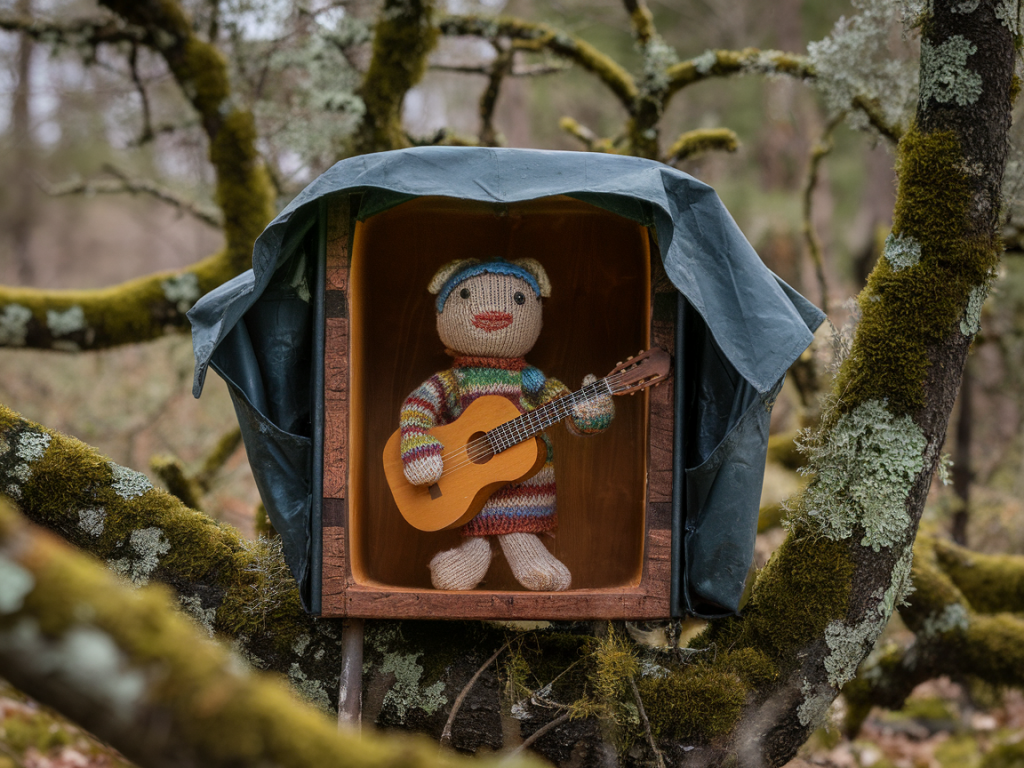
I first started thinking about a weatherproof soundbox on a soggy Sunday at a midsummer folk festival, when my little knitted fiddler got soaked in a downpour and the tiny speaker died mid-refrain. Since then I’ve made several pocket-sized sound modules that survive mud, rain, and even a polite amount of campfire smoke — enough to keep the songs and stories going between stages. Below I’ll share the parts I use, my assembly steps, and the practical tricks that keep electronics working in the very human, very messy world of festivals.
Why make a tiny weatherproof soundbox?
Knitted puppets and pocket characters are tactile and transportable, but adding sound brings them to life. However, festivals are not clean labs: there’s mud, spilled cider, drizzle, and that lovely campfire smoke that permeates everything. I wanted a solution that was:
- Small and light enough to sew into or hide in a puppet body without distorting its posture.
- Durable against moisture, dirt and soot.
- Accessible — you can repair or swap batteries in the field.
- Good-sounding for speech and simple tunes.
Core components I use
For a balance of size, sound, and simplicity, my go-to combo is a tiny MP3 module + micro speaker + slim battery. You can substitute similar parts, but the specs below are a reliable starting point.
| Component | Example | Notes |
| MP3 Player Module | DFPlayer Mini | Cheap, standalone, supports microSD, can play on loop |
| Speaker | 8–12 mm waterproof micro speaker or 0.5–1 W 0.5–1" speaker | Look for small speakers with sealed cones or use silicone coating |
| Battery | LiPo 3.7V 200–500 mAh or flat AAA pack | LiPo is compact; use a protection board if needed |
| Enclosure | Small IP67 case / Pelican 1010-style micro case or project box | Rigid protection against knocks and mud |
| Switch | Micro slide switch with gasket | Allows turning off between shows |
| Waterproofing materials | Silicone sealant, Sugru, hot glue, conformal coating | Different layers for different vulnerabilities |
Design choices: sealed box vs breathable membrane
I’ve tried a fully sealed rigid case and a partially breathable approach. Fully sealing the module is the most reliable against rain and mud, but it can muffle sound. My compromise: a sealed electronics compartment with a sound port covered by a hydrophobic membrane (like GORE-TEX speaker fabric or a small piece of silicone-treated cloth). This lets sound out while keeping water and soot at bay.
Step-by-step build
This is my standard build process that I can complete in about an hour once components are ready.
- Prepare the electronics: Load your audio files onto a microSD card (for DFPlayer Mini name files in a simple order). Test the module and speaker on a bench supply so you know it works. For LiPo batteries, check voltage and add an inline fuse if you like extra protection.
- Choose the enclosure: I like small IP67-rated cases that take silicone gaskets. If you’re using a hobby project box, sand and roughen the insides where you’ll bond silicone.
- Mount the speaker: If the speaker isn’t waterproof by spec, coat its cone edge lightly with silicone or use two thin coats of flexible epoxy. Fit it into a recess in the case so it faces the sound port.
- Create the sound port: Drill a small hole for the speaker opening. Cover this hole from the outside with hydrophobic fabric (sized slightly larger than the hole), then seal the edges with silicone. On the inside, add a small foam baffle to reduce rattles.
- Secure the electronics: Fix the MP3 module and the battery inside with hot glue or double-sided foam tape so they don’t move. Keep wiring short and tidy. If you have a LiPo, add a small switch between battery and module for power control.
- Seal cable and switch penetrations: If your switch or charging port breaches the case, use rubber grommets or apply Sugru to create a flexible, washable seal. For a micro USB charging port, you can buy waterproof USB glands or cover the port with a tightly sealed flap of silicone.
- Conformal coat the board: If you expect smoke or heavy soot exposure, spray a thin conformal coating (available from electronics suppliers) onto the MP3 board to protect solder joints and components from corrosion. Do this before final assembly and allow full cure.
- Final closure: Close the case and reinforce any seams with a thin bead of exterior-grade silicone where the lid meets the body. Wipe away excess and let it cure fully — overnight is best.
How I sew the module into a puppet
I usually prefer the module removable for charging and repairs. I make a small pocket inside the puppet’s back or torso out of tightly knitted fabric or a sewn-in cotton pocket. The case sits inside this pocket, and I stitch a small flap with a button or Velcro to hide it. If you want a more integrated look, you can make a knitted pouch with a drawstring and cover the opening with a decorative appliqué.
Power and volume considerations
LiPo batteries are compact and deliver better volume than coin cells. For short festival sets, a 500 mAh LiPo will last many hours at low-moderate volume. If you need louder volume for a busy field, consider a slightly larger speaker or a small boost amplifier board, but be aware this increases size and power draw.
Cleaning and maintenance
After a muddy weekend, I remove the module from the puppet. If the case is well sealed, wipe down the outside with a damp cloth and mild soap. Avoid soaking any switch openings. If soot has crept in, open the case in a clean area, blow out loose dust with low-pressure compressed air, and reapply conformal coating if corrosion appears.
Troubleshooting common problems
- Muffled sound: Check the sound port covering — too thick a membrane or too much silicone can deaden tone. Thin hydrophobic fabric is best.
- No power: Verify battery voltage; LiPo cells can be over-discharged. Check the inline fuse and switch. If using a charging port, confirm the charge chip LED behavior.
- Intermittent playback: Look for loose solder joints. Conformal coating can hide damaged joints, so test before coating and supplement with a small dab of hot glue on vulnerable solder points.
- Speaker damage from smoke or heat: Keep the module away from direct flames. Soot can be cleaned but heat warps plastic; use a heat-resistant enclosure if you regularly expose it to smoky campsites.
Materials and suppliers I trust
I often order DFPlayer Mini modules and small speakers from Adafruit or SparkFun equivalents for quality, and low-cost clones from generic marketplaces when I’m prototyping. For batteries, I buy LiPo from reputable suppliers (HobbyKing, Adafruit). For enclosures, Pelican micro cases are rugged and widely available; small IP67 project boxes are sold by electronics retailers. Sugru and silicone sealants are easy to find in craft shops or online.
Finally, remember that these are festival tools — not museum artefacts. I build my handheld soundboxes to be repairable in my tent, so I keep a tiny repair kit (spare speaker, small screwdriver, Sugru, and a strip of hydrophobic fabric) in my bag. With that, even the muddiest, smokiest weekend is survivable, and my knitted characters keep telling their stories.