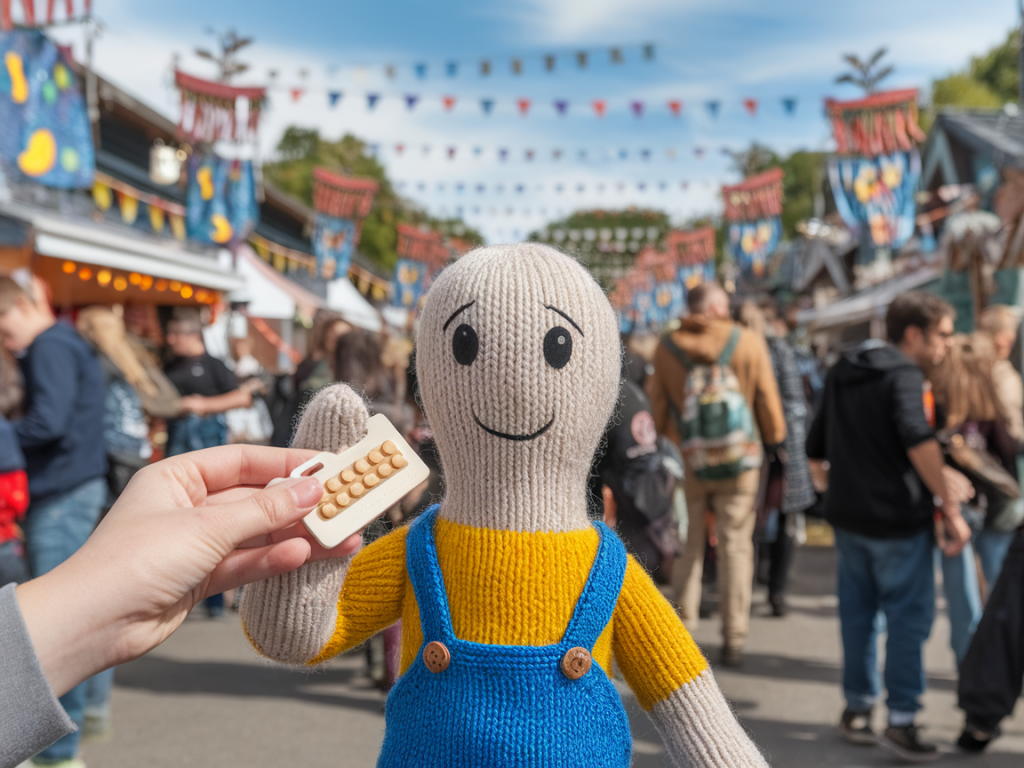
I like to think of a knitted character as a small ambassador: it carries stitches, dye, and a maker's patience, but it also carries a story. At festivals — loud, crowded, and delightfully chaotic — that story can be swallowed up by the hubbub unless you design a way for it to be heard through touch and quick encounters. Over the years I’ve developed a tactile tag system that fits the fizz of a busy folk festival: it invites passing hands to pause, connects maker to viewer, and tells a concise origin tale without asking for long attention spans. Below I share my approach, materials, and practical tips so you can create tags that are as charming and resilient as the characters they accompany.
Why a tactile tag system?
Festival stalls are sensory overload: music, scent of street food, and people on the move. Visual labels help, but touch creates a different kind of intimacy — a fleeting, memorable contact. A tactile tag system does three things well:
- Speaks to passing hands: festival-goers often pick things up to judge them; a tactile tag gives that pick-up purpose.
- Connects on multiple levels: combining texture, short text, and a scannable link (QR/NFC) respects different ways people consume stories.
- Survives the environment: designed well, tags can endure rain, rambunctious kids, and an afternoon of being shuffled in tote bags.
Core design principles I follow
I keep these principles in mind as I sketch and prototype:
- Immediate legibility: short, evocative text that reads in three seconds.
- Tactile contrast: use raised shapes, fabrics, or stitched elements that differ from the character itself.
- Layered access: quick tactile intro + slightly longer backstory via QR or NFC for those who want to linger.
- Durability: weatherproofing and secure attachment to survive a busy day.
- Accessibility: include braille or high-contrast type when possible and a way to access audio for non-readers.
What to put on the tag
Think of the tag as a micro-storyboard. I usually structure the content into three layers:
- Front tactile cue: a knitted motif, leather tab, or raised symbol that signals the character’s origin (e.g., a tiny shepherd's crook for a rural tale).
- One-line origin: a single sentence under 12 words. Example: “Made in the market town of Alderford from reclaimed wool.”
- Extended story link: a QR code or NFC chip that opens a page with the fuller origin story, pattern notes, maker profile, audio clip, and care instructions.
Materials and construction
Choose materials that complement your character and the festival setting:
| Component | My preferred option | Why |
|---|---|---|
| Base tag | Vegetable-tanned leather or thick recycled card | Durable, tactile, and ages nicely |
| Raised element | Hand-stitched wool motif or small felt applique | Soft to the touch and links visually to the knitted piece |
| Fastener | Brass split ring or stitched fabric loop | Secure and festival-proof |
| Digital layer | QR code on laminated paper or NFC sticker | Instant access on phones; NFC is frictionless if available |
| Finish | Waterproofing wax for leather; laminating for card | Protects from spills and rain |
Step-by-step making process
Here’s the workflow I use when making a batch for a festival:
- Sketch the tag layout. Keep the raised motif proportionate to the tag — you want it noticeable but not bulky.
- Cut base shapes. Use a template so all your tags are consistent. For leather, a rotary cutter and metal ruler are my best friends.
- Add the tactile motif. I often knit a 3–5 cm miniature or use layered felt and whipstitch it on. Contrasting yarn gives better tactile definition.
- Print and attach the QR or embed an NFC sticker. Test both on multiple devices before finalising.
- Apply finish. Wax leather lightly and buff; laminate paper tags and trim edges smoothly.
- Attach using a secure ring or sewn loop; consider a small safety break-away for children’s safety at family-oriented festivals.
Designing the digital layer
A QR or NFC should open a tidy mobile page with:
- Short headline: the same one-line origin appears again for continuity.
- Expanded story: 150–300 words about where the yarn came from, who inspired the design, and any traditional motifs used.
- Audio snippet: 30–60 seconds of me telling a quick anecdote about the character — people often prefer listening while walking.
- Practical info: price, materials, washing instructions, and commission availability.
- Links: to my shop, social handle, and festival stall info. For Knittedcharacterfolkfestival.co.uk I include the festival’s tag so visitors can explore other makers I’m spotlighting.
For the tech I use a simple landing page builder (Netlify or Carrd) and generate QR codes with a static link. If I have the budget, I embed NFC tags programmed with the same URL for a seamless tap experience — especially handy for less tech-savvy visitors who might not open a camera app to scan.
Accessibility and inclusivity
Accessibility is non-negotiable for me. Small gestures make a big difference:
- Add a short braille sticker or embossed dot pattern that signals the presence of an audio version.
- Ensure web pages are screen-reader friendly: proper headings, alt text for images, and clear audio transcripts.
- Use high-contrast text for the one-line origin and large, legible fonts on the tag. Avoid italics or fancy scripts that blur at a glance.
Attachment and display strategies at the stall
How you present the tag makes as much difference as its design:
- Hang tags at different heights so both children and adults can reach them.
- Keep a small tester board with one tag mounted for people to explore without picking up every toy.
- Offer a gentle “try me” sign encouraging touch; festival crowds appreciate permission in noisy spaces.
- Have a QR poster at eye level for those who prefer not to handle items but still want the story.
Testing and iteration
I test tags in two staged ways: first, a quick wear-and-tear check by simulating a festival day (damp cloths, repeated handling). Then I run small user-tests with friends and children at community markets, asking them to find the story in under 20 seconds and to tell me what they remember after five minutes. The tweaks are usually tiny: a bigger QR contrast, a slightly thicker loop, or a clearer headline.
Examples from my stash
One of my favourite successes was a little hedgerow sprite knitted with reclaimed blackface wool. Its tag was a small oak-leaf felt applique — rough edges, slightly padded — that immediately read as ‘woodland’. The one-line origin read: “Born from hedgerow yarn, inspired by my grandmother’s fox tales.” The QR linked to a 45-second clip of me telling the fox story, which drew lingering smiles from people who then asked about purchasing commissions.
Another favourite used a brass washer as a tactile cue for a seaside character — the cool metal felt distinct against the wool and hinted at boat rings and seaside hardware. Simple materials can carry strong associations when chosen with intention.