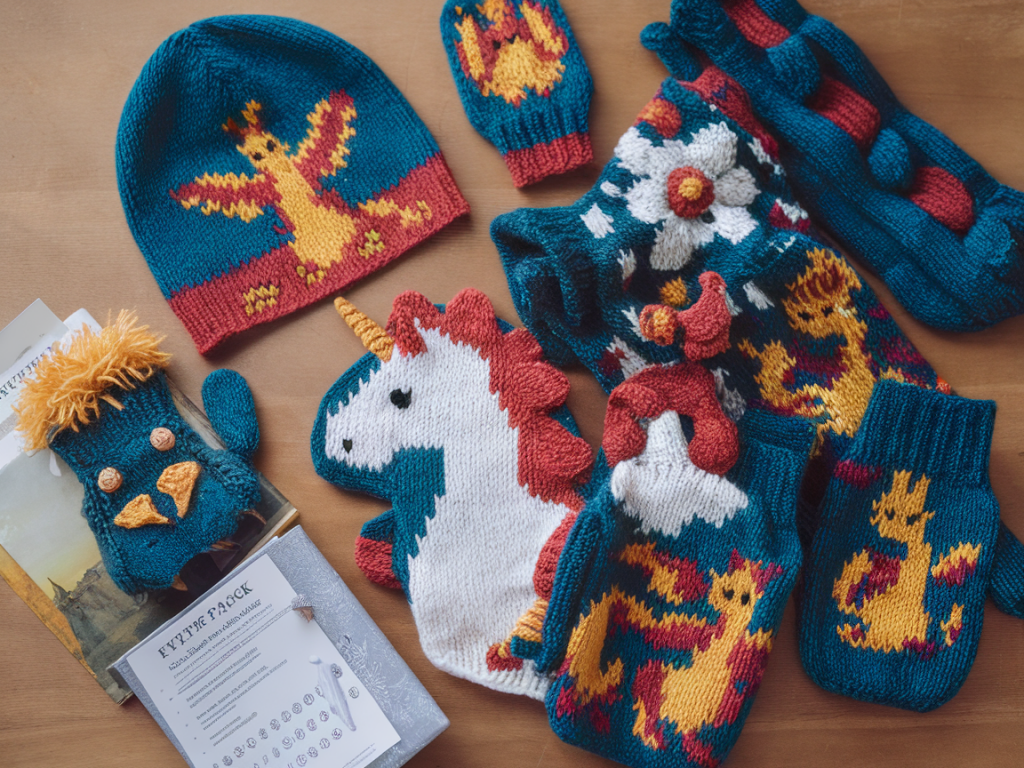
I remember the first time a village storyteller told me a tale about a small, stubborn fox who outwitted a fiddler at the summer fête. I knitted a tiny fox in the days that followed and imagined the story stitched into every seam. Later, when fellow makers asked to buy a pattern, I faced a knot of practical and ethical questions: how do you turn a local folktale into a commercial knitted pattern pack without erasing the community that kept that story alive? Over the years I’ve negotiated permissions, written agreements, and learned from elders and festival organisers about respectful practice. Here’s a guide—practical, legal-minded, and rooted in community care—to help you navigate licensing a local folktale for a commercial knitted pattern pack while keeping community rights intact.
Start with relationship and consent, not contracts
Before any paperwork, I go back to the people. A folktale isn’t an object you can simply extract; it’s woven into community memory. Reach out to the storytellers, families, local heritage groups, or community elders who are custodians of the tale. Explain your intentions clearly: what you want to publish, how you plan to use the story (as inspiration, in full text, as a retelling), and how proceeds or recognition will flow back to the community.
- Ask open questions: Who tells this story? What variations exist? Are there any taboos or sacred elements?
- Offer to meet in person where possible or to have a trusted intermediary present. Bring draft visuals of your knitted characters to show how the tale will be rendered.
- Document consent in writing, but only after the community has had time to discuss internally. Consent must feel voluntary, informed, and ongoing.
Understand what you’re actually licensing
Not all parts of a folktale are treated the same under law. In many jurisdictions, traditional folktales in the public domain may not be protected as copyright, but the expression—a particular retelling, a collector’s written version, or a performance—can be. Moreover, communities may assert customary or cultural rights that are not perfectly captured by copyright statutes but are ethically important.
- If you’re using a published collector’s text, secure permission from the copyright holder of that published version.
- If you’re using an oral retelling from a living storyteller, treat that storyteller as the rights-holder for their specific telling.
- If the tale includes sacred motifs, songs, or ritual elements, consider restricting or excluding those elements from commercialisation.
Choose the right license and terms
Licenses can be generous or restrictive. My aim is usually to permit commercial use of my pattern pack while ensuring the community retains moral ownership and benefits. Here are practical license elements I include or negotiate:
- Scope: Specify that the licence covers the use of the story’s elements as inspiration for knitted character designs and accompanying short retellings, but not commercial reproduction of any specific collected text without the collector’s permission.
- Territory and duration: Decide whether you need worldwide rights and whether the licence is perpetual or for a fixed term (e.g., five years with renewal options).
- Exclusivity: Avoid exclusive licences unless the community specifically requests it. Non-exclusive licences allow broader cultural sharing.
- Attribution: Require a clear credit line to the storyteller or community in the pattern materials, website, and any marketing (e.g., “Story told by [Name]/[Village]”).
- Revenue sharing: Offer a percentage of profits, a flat fee, or community benefits (donations to a local cultural fund, support for festivals, skills workshops). Be transparent about how you calculate profits.
- Moral rights and cultural restrictions: Include clauses that protect the community’s moral claims—no derogatory adaptations, no use in harmful industries, and respect for sacred or restricted elements.
- Reversion and review: Include a right for the community to review derivative uses and a reversion clause if terms are breached.
Practical contract language to include
When I draft agreements (often with the help of a cultural heritage solicitor or a charity experienced in IP), I try to keep language plain and specific. Below is a simple table summarising core clauses you should consider including.
| Clause | Purpose |
|---|---|
| Grant of Licence | Specifies what rights are granted (e.g., “to reproduce and sell knitted patterns inspired by the folktale”), territory, and duration. |
| Attribution | Specifies the exact credit line and placement within the pattern pack and promotional materials. |
| Revenue Sharing | Sets out percentages, payment schedule, accounting transparency, or alternative benefits for the community. |
| Moral/Cultural Restrictions | Prohibits uses that the community finds offensive or commercially inappropriate. |
| Review Rights | Allows community review of final pattern text and images before publication. |
| Termination and Reversion | Explains how the licence can be terminated and what happens to derived works upon termination. |
Be transparent about money and benefits
Money matters can make or break trust. I’ve learned that vague promises breed suspicion; precise numbers build confidence.
- If you promise a percentage of net profits, define “net profits” clearly—what costs are deductible? Selling platforms like Etsy or Ravelry charge fees; include those in accounting.
- Consider alternative benefit models: a fixed donation per pattern sale to a community-run heritage project, subsidised workshop spaces, or funding for local storytellers’ fees.
- Commit to regular accounting statements with receipts available on request. Small communities appreciate straightforward reporting.
Protect both your creative contribution and the community’s intangible interests
Your knitted designs and pattern instructions are new creative works and can be copyrighted separately. Make sure your contract clarifies that while you’re licensing the story elements, you retain copyright in the pattern text, charts, and photographs you produce—subject to agreed attribution and revenue-sharing. At the same time, agree to respect community claims over intangible cultural heritage by avoiding commodification of restricted material.
Practical workflow I use for a pattern pack
- Research and listening: multiple visits to the storytellers; record with permission; take notes on local variations.
- Draft designs and sample patterns: create prototypes and show them to the storytellers for informal feedback.
- Draft a simple licence proposal: plain-language clauses on scope, attribution, and benefits; send for discussion.
- Agree, sign, and record: sign a written agreement; leave copies with community representatives.
- Pre-publication review: share final pattern PDF and product listings with the community before launch.
- Launch and follow through: make agreed payments; send periodic reports; continue community engagement (workshops, readings, donations).
When things get complicated
There are moments when a story is contested or multiple claimants assert different rights. In those cases I slow down. Mediators, local cultural organisations, or small grants can help fund a fair process. If a collector’s published version is involved, you may need to negotiate with that publisher as well as with the source community. I’ve found that festivals and heritage trusts are often willing to support a transparent, respectful solution.
Finally, remember that licensing a folktale is not just a legal transaction: it’s a relationship. Treat the process as an opportunity to strengthen community culture—pay fair fees, honour attributions, and stay in dialogue. When I release a pattern that arose from a village tale, I want readers to feel the breath of the storyteller in the stitches and to know that the community that nurtured that tale continues to be recognised and supported.