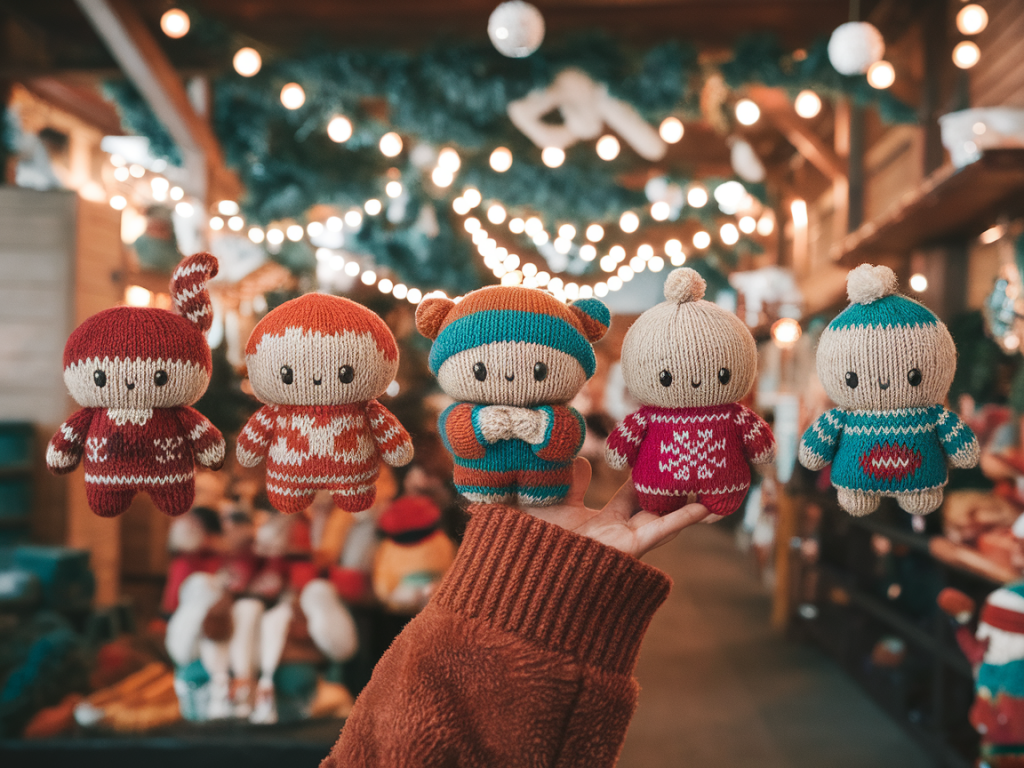
I first wondered whether a single knit pattern could become a festival series the year I made a tiny fox for a friend’s birthday and ended up with people asking for it again the next morning at a summer folk festival. That fox had a simple silhouette, a jaunty scarf and a mischievous tilt to its head. It was meant as a one-off — a cosy, satisfying make — but the question stuck with me: could that one pattern be thoughtfully developed into five seasonal variants that each feel fresh, sell well at different events, and tell a little story on their own?
Why a single pattern makes sense
There are practical and creative reasons to start from one pattern and iterate. Practically, one tested pattern saves development time and reduces the risk of sizing or construction errors when you’re working at festival speed. Creatively, a strong base design acts like a character sketch: the same face, posture and proportions can wear different costumes, props and seasonal accessories, so the maker’s voice stays recognisable across a collection.
At markets and festivals, shoppers often like the continuity of a series. They recognise the “brand” of your character and feel encouraged to collect variants — a spring fox with a garland, a midsummer fox with a guitar, an autumn fox with a pocket of seeds, a winter fox with a lantern, and a festival-closure fox carrying a tiny banner. Each variant becomes a micro-story, a souvenir of a particular moment or mood.
Design strategy: what to keep and what to change
When adapting one pattern into multiple seasonal variants, I separate elements into core and variable parts.
- Core elements: head shape, body proportions, basic stitch patterns, and the method of assembly. These are the scaffolding that ensures every variant fits the same pattern and uses the same skillset.
- Variable elements: accessories, colours, surface details (embroidered features, small appliqués), poses (arms holding different objects), and yarn texture (fuzzy mohair for winter, crisp cotton for summer). These are the things that tell a variant’s seasonal tale.
Keeping the core consistent also simplifies packaging and pattern delivery. One pattern file with clear sections for “Base Construction” and “Seasonal Variants” is an efficient, user-friendly format that works in print and PDF.
Practical adaptations for each season
Here are examples from the five-variant series I developed from my original fox pattern, and the choices that made each one sing at different festivals.
- Spring variant: lightweight DK cotton yarn, tiny flower crown, embroidered freckles and a pocket with a felted egg. Colours: soft greens, pale yellows, blush pink.
- Summer variant: sport-weight cotton or linen blend, jaunty bandana, small guitar accessory made from felt, embroidered sun motif. Colours: bold corals, sky blues, sunshine yellow.
- Autumn variant: worsted wool, scarf and satchel, seed packet prop, embroidered leaf pattern. Colours: rust, olive, deep mustard.
- Winter variant: mohair or chunky wool for a cosier look, knitted hat and mittens, lantern made from felt and a tiny LED tealight. Colours: deep berry, forest green, navy.
- Festival-closure variant: mixed textures, tiny banner or bunting accessory, party confetti embroidery, metallic thread accents. Colours: celebratory jewel tones and metallics.
Pattern writing and testing
Even if the base pattern is proven, each variant needs testing. I ask beta knitters to make the base and at least one variant to spot any unclear directions where the accessory joins the body or where different yarn weights affect gauge. Testing also reveals where a construction trick — like adding a small wired arm for holding a prop — becomes necessary.
Write the pattern in modular sections: “Base Body,” “Head & Face,” and then separate “Variant Add-ons.” Include clear photos for tricky steps and supply lists with yarn alternatives. Mention substitutions explicitly (e.g., “For a fluffier winter look, swap in 25% mohair held with DK yarn”) so novice buyers don’t get stuck choosing materials.
Pricing, bundles and festival sales tactics
Think of your series as both a collection and a set of entry points. Price individual patterns affordably to encourage impulse buys at a stall. Offer a bundled PDF of all five variants at a small discount for collectors or gift-seekers. At festivals, a printed leaflet showing the whole series helps shoppers visualise collecting them all.
On the selling side, physical copies and sample knits are invaluable. Display one of each variant grouped together so the story reads at a glance. Small props — a tealight in the lantern, a tiny banner on a stick — make the character’s use-case obvious and kindle imagination.
Packaging, presentation and sustainability
Packaging ties the series together. I keep the aesthetic consistent: recycled kraft paper bands, a branded sticker, and a card tag with the knit’s name and variant. For festival shoppers who want instant gratification, small DIY “make & take” kits with pre-cut felt accessories or printed templates (no yarn included) can be great low-cost items.
Be transparent about your materials. I list fibre content and recommend responsible suppliers — for example, mentioning British yarn brands like Rowan or West Yorkshire Spinners if they fit your palette, or ethically sourced mohair alternatives. This reassures buyers and supports conscious festival economies.
Storytelling at the stall and online
Each variant is an excuse to tell a tiny story. At my stall I stick a short, handwritten note beside each sample: “This autumn fox has a satchel for seed-sowing after the Harvest Ceilidh,” or “The winter fox carries a lantern to guide late-night singers home.” People buy into narratives as much as they buy items. Online, use the same language across product descriptions and social posts so the series feels cohesive.
Scaling production without losing charm
If a variant becomes unexpectedly popular, small-batch production is the answer. Work with local makers or a community craft co-op to knit a limited run, or create downloadable kits for customers to assemble themselves. Keep a slow, intentional pace — part of the charm of handcrafted festival pieces is that they’re not mass-produced.
Quick reference: materials per variant
| Variant | Yarn weight | Key accessory |
|---|---|---|
| Spring | DK / cotton | Flower crown |
| Summer | Sport / linen blend | Bandana & guitar |
| Autumn | Worsted wool | Scarf & satchel |
| Winter | Chunky / mohair blend | Hat & lantern |
| Festival | Mixed textures | Banner / bunting |
Turning one knit pattern into a festival series isn’t just about multiplying designs — it’s about finding the narrative threads that make each variant feel like a moment worth collecting. With a clear base pattern, thoughtful seasonal choices, user-friendly pattern writing, and festival-friendly presentation, a single character can become five small companions that travel from market stall to living room shelf, each carrying its own little tale.