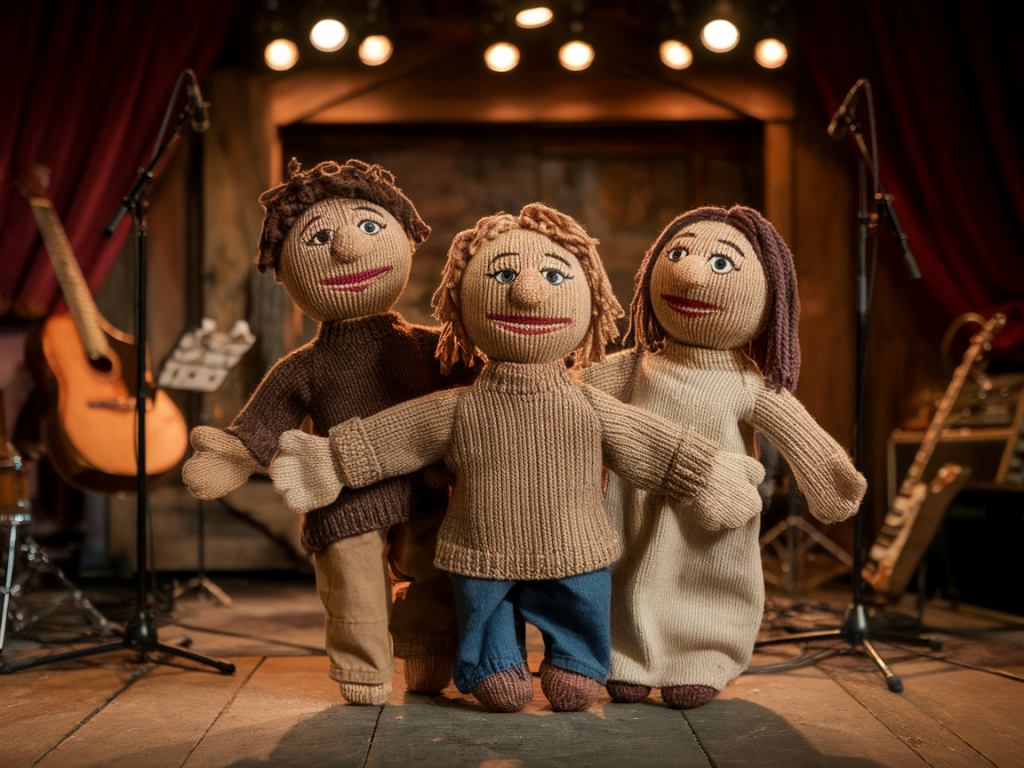
When I first brought a ten-minute knitted puppet set to an acoustic folk stage, I remember feeling equal parts excited and a little terrified. Knitted characters are intimate by nature — small hands, whispered lines, and tactile detail — yet folk stages often expect clear, strong sound and a presence that reaches the back row. Here’s how I adapted that short, cozy piece for a festival slot with limited microphone gear, so the puppets remained honest and the audience could hear every stitch of story.
Start with what you have and what you need
Ask yourself a few basic questions before you arrive at the venue:
Often at smaller folk festivals you’ll find one or two wired SM58-style vocal mics, maybe a small PA, and a volunteer sound person. That’s enough — but you have to plan for economy. My guiding principle is to make the piece work for voice-first, electronics-second.
Rework your script and blocking for clarity
Ten minutes is short, so every line should count. I tightened my script to favour strong, distinct character voices and physical beats that read from afar. Tips I used:
If possible, test in the actual space. A whisper that works in a cosy workshop may vanish in a marquee with the doors open.
Mic technique when gear is limited
With just one or two vocal mics, consider these practical approaches:
When I must share a mic between characters, I rehearse switching faces and voices so the sound person can leave gain and EQ alone. Consistency is your friend when the soundboard is staffed by a volunteer.
Projection, articulation, and the knitted aesthetic
Folk stages value authenticity. You don’t want to turn a handmade puppet into a Broadway megaphone — but you do want clarity. I work on three vocal habits:
Remember: the knitted look invites quiet tenderness. Use silence and small sounds — the rattle of buttons, the creak of a wooden stage — to punctuate moments. These can be amplified subtly and become memorable.
Use simple sound cues and props
With limited gear, less is more. I brought a tiny palette of sound cues that a single mic could pick up and that I could trigger live:
If you use pre-recorded tracks, keep them minimal. A looped drone or soft accordion under a scene can enrich texture without drowning voices. I prefer running these through a simple audio interface like a Focusrite Scarlett or via the sound tech’s laptop when available.
Work with the soundperson — make it collaborative
Introduce yourself, describe the piece in one sentence, and give two key requests: a good vocal presence and a simple EQ preference (reduce low rumble, boost mids for clarity). Useful shorthand:
A friendly sound person will appreciate concise direction. If there’s no sound tech, ask a volunteer to walk the space during rehearsal and tell you where the voice fades. Adjust your blocking accordingly.
Visual cues and stagecraft that help sound
Make the puppets visually communicative so the audience doesn’t strain to hear. I rely on:
Lighting is often modest at folk stages. Position yourself so natural daylight or stage wash hits the puppets’ faces. If the venue provides a single spotlight, practice moving into it during key lines.
Audience management and storytelling tricks
Engage the room gently. Folk audiences love being included but dislike theatrical fidgets. I use a few audience-facing techniques:
Quick checklist to pack
| Item | Why |
| SM58 or spare dynamic mic | Reliable, tough, rejects stage rumble |
| Short mic stand / boom | Positions mic at puppet mouth height |
| Spare batteries and cables | Don’t trust festival power logistics |
| Small instrument (ukulele/guitar) | Simple musical anchor that sounds good on small PA |
| Phone/tablet with pre-records | Backup ambience and cues |
| Gaffer tape & labels | Mark sweet spots and quick fixes |
With a little forethought, your knitted puppet set can feel at home on a folk stage — intimate, resonant, and full of character — even when the mic situation is lean. The goal isn’t to fight the gear but to craft your piece so it sings through simplicity. Bring warmth, clarity, and the tactile charm of your characters: the audience will lean in, and that’s where the magic truly lives.