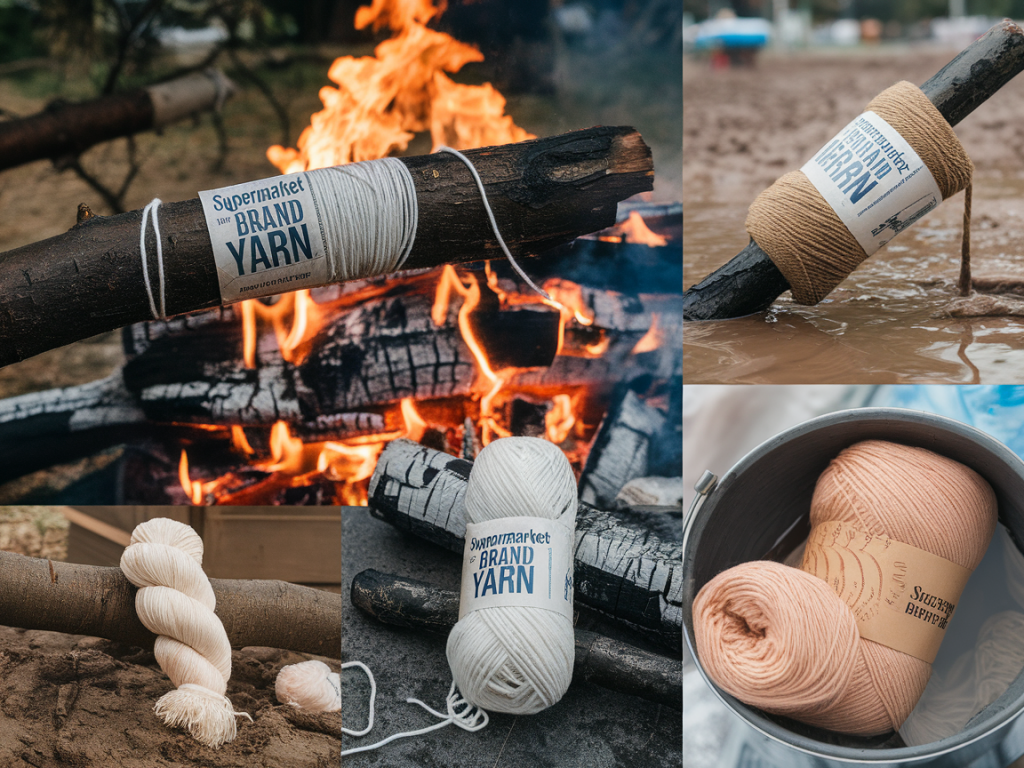
I’ve been hauling projects and a battered project bag to fields, village greens and muddy festival carparks for most of my life. After more than a dozen summers of knitting while tents are pitched and bands tune up, I decided to put a few supermarket yarns through a proper “festival stress test.” I wanted to know, in plain terms: which inexpensive, widely available yarns actually survive a weekend of campfire smoke, spilled cider, rain and mud — and which ones you’ll regret bringing to the site.
How I tested them (short, practical method)
I wanted the test to reflect real festival conditions rather than a sterile lab protocol. Over three weekends at different folk events I carried five common supermarket-style yarns through the same sequence of stresses:
I judged them on: how much smoke smell remained, how well mud came out, whether fibres shed or bubbled (pilling), whether anything singed near a spark, and general handle/feel after the treatment. I also noted colourfastness — festival mealtimes include spills, and dyes matter.
The yarns I tested
These are the kinds of yarn you can commonly find at UK supermarkets and budget craft shelves. I didn’t test brand-new indie luxury skeins because one of the questions people ask is whether supermarket yarn is “good enough” for festival knitting.
What I found — the quick take
Acrylic (100%) — best overall for mud and practical festival life. Mud brushes off surprisingly well after a cold water rinse and a short spin in the machine. Acrylic rarely retains smoke as strongly as wool and dries quickly. Downsides: acrylic can sing and melt if close to sparks, and the hand can feel plasticky after repeated washing. Colourfastness was generally good.
Acrylic blends — behave like a compromise. The small wool content can hold scent a bit more and feel cozier, but blends often still wash well. Choose these if you want a softer feel without the full maintenance of wool.
Superwash wool — pleasantly resilient. The superwash treatment prevents felting and makes machine washing possible, but superwash fibres did keep a little more smoke aroma than acrylic. Mud lifts out with a gentle wash. The big plus is the hand — wool still feels cosy and festival-appropriate.
Non-superwash wool — the most problematic for open-fire situations. It soaks up smoke and scent readily, and the fibre locks in oils and dirt, making mud stains harder to remove. It also has the potential to felt if agitated while dirty. That said, it still looks and feels beautiful when treated carefully, and if you prefer natural fibres you can manage it with careful storage and washing.
Cotton/cotton blends — mud clings but washes out; the fabric gets heavy when wet and dries slowly in damp festival weather. Cotton didn’t hold smoke as strongly as wool, but the weight when wet makes it a nuisance for wearable festival projects. Colourfastness varied by source.
Simple results table (practical ranking)
| Yarn type | Smoke retention | Mud removal | Durability / pilling | Festival recommendation |
|---|---|---|---|---|
| Acrylic (value) | Low | High | Medium (can pill) | Top choice for festival projects |
| Acrylic blend | Low–Medium | High | Medium | Great compromise |
| Superwash wool | Medium | Medium–High | High (keeps shape) | Good if you want natural fibre |
| Non-superwash wool | High | Low–Medium | Medium | Bring if protected and careful |
| Cotton / blends | Low–Medium | Medium | High (sturdy) | Good for accessories, avoid for large wearable |
Practical tips I now use at every festival
Festival project ideas by yarn type
If you’d like, I can publish a follow-up with specific supermarket product names I tested (I photographed labels and noted dye lots), and include a short pattern for a “festival-ready” project bag you can knit in inexpensive supermarket yarn. Tell me which events you want the recommendations for — muddy summer gatherings or damp, coastal folk weekends — and I’ll tailor the next round of tests accordingly.