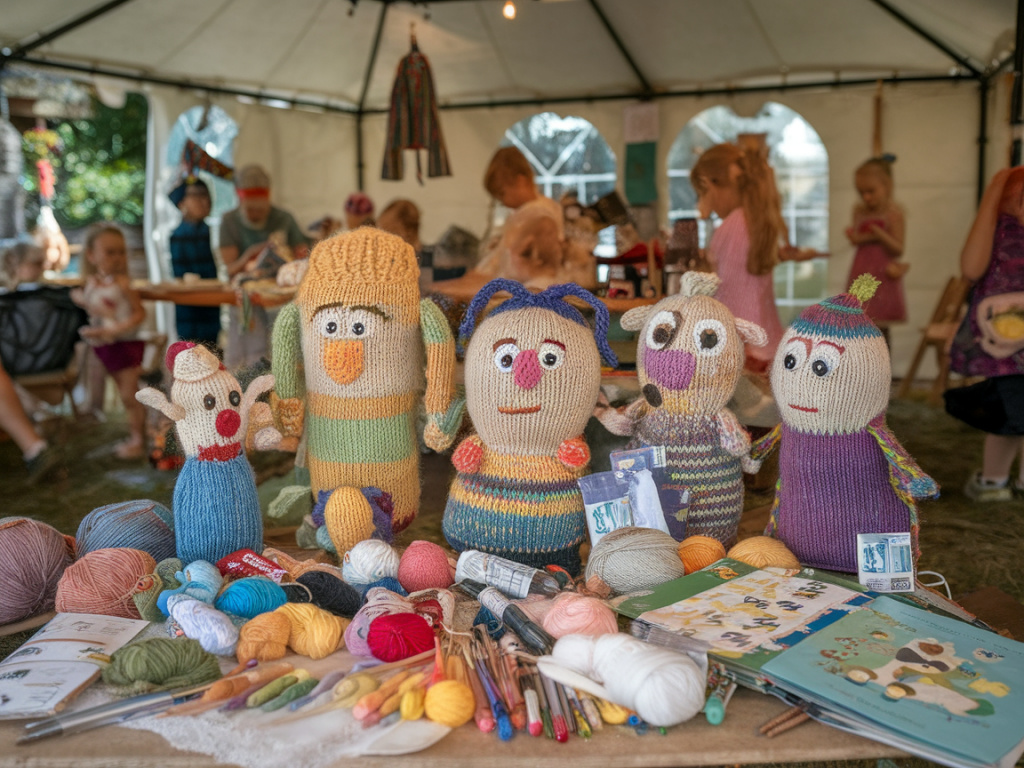
I run short, joyful workshops for children at village fêtes a lot — knitted characters have a way of drawing a crowd, and 45 minutes is a sweet slice of time: long enough for real making, short enough to hold attention. Over the years I’ve refined what I actually need to bring so the session is calm, creative and, most importantly, finished with a small puppet the child can leave with. Below I’ll walk you through the exact kit I pack, how I set the workshop up, and a few little tips that save time and nerves on the day.
The basic philosophy
45 minutes is not for mastering knitting — it’s for making a charming knitted puppet using simple stitches, a little glue or stitch-tying, and imaginative finishing. My goal is that every child walks away with something recognisable and personal. That means I favour pre-prepared elements (pre-knitted tubes or quick-to-make squares), simple assembly, and sensory materials that keep little hands busy.
What I pack: the exact kit
Below is the kit I take for a group of up to 12 children (adjust quantities in the table further down). I break the kit into categories: core knitted components, tools, embellishments, set-up and safety/comfort items.
Core knitted components
- Pre-knitted tubes or mitten shapes — these are the puppet bodies. I usually bring a mix of sizes: small (approx. 12cm), medium (15–18cm), and large (20cm). I knit these in chunky yarn (4–6 mm needles) so they're quick to make beforehand and easy for small hands to stuff and manipulate.
- Pre-knitted head pieces or pompom heads — tiny balls you can sew on or glue. Alternatively, use soft craft pompoms (3–4 cm).
- Small felt squares — for faces, tongues, hats, tiny clothes.
Tools and assembly materials
- Plastic tapestry needles (big-eyed) — essential for safe sewing. I bring one per child plus extras.
- Child-friendly scissors — blunt-tip for safety. One per two children is enough if I circulate.
- Glue sticks and fabric glue — glue sticks for paper/felt, a small amount of textile glue for stubborn bits (I use Aleene’s or E6000 sparingly).
- Stuffing — polyester fibrefill in small bags (Hobbycraft sell small packs). Pre-portioning into little zip bags helps keep queues moving.
- Elastic bands and small safety pins — for temporary holding while stitching.
- Wool scraps and yarn ends — for hair, eyebrows, and ties. I include a palette of bright colours in chunky weight.
Embellishments that delight
- Googly eyes and felt circles — I prefer felt faces because googly eyes can fall off; I bring both and glue on as required.
- Buttons (large, shankless) — for noses or decoration (avoid small buttons for under-3s; check local event age ranges).
- Ribbons, tiny bells, and sequins — a little sparkle goes a long way.
- Pre-cut felt accessories — hats, capes, collars, moustaches — these speed up the creative process.
Set-up items
- Tablecloths or craft mats — wipeable. I prefer dark colours so wool shows up.
- Small containers/trays — for sorting buttons, eyes and bits (like muffin tins or ice cube trays).
- Signage and example puppets — a small board showing 3–4 finished examples inspires choices.
- Wet wipes and paper towels — for sticky fingers.
Safety, admin and comfort
- First-aid kit — plasters, antiseptic wipes, and a cold pack.
- List of allergies and a sign asking caregivers to warn me about choking risks or allergies.
- Consent slips / permission forms — if the fête requires photography rules, etc.
- Spare aprons or old tea towels — craft is messy and some parents appreciate this.
- Small cash box or card reader — if you’re charging a small fee (I bring a SumUp reader).
Kit quantities: quick reference table (for up to 12 children)
| Item | Quantity (for 12 kids) | Notes |
|---|---|---|
| Pre-knitted tubes (various sizes) | 12–18 | Bring extras; some kids like two-tone puppets |
| Pre-knitted or pompom heads | 12–15 | Glue-on or sew-on |
| Plastic tapestry needles | 14–18 | One per child + spares |
| Child scissors | 6–8 | Share between children |
| Glue sticks | 6–8 | Bring more if many felt pieces |
| Small felt squares | 24–30 | Two per child in different colours |
| Googly eyes / felt circles | 30–40 | Mix for choice |
| Stuffing (zipped bags) | 12–15 small bags | One per puppet + extras |
| Yarn scraps | Bundle x 6 | Sufficient for hair & ties |
How I run the 45-minute session
I divide the time into clear, gentle stages and I use a timer discreetly so kids (and grown-ups) can see the pace.
- Welcome & demo (5–7 minutes) — quick hello, show 3 finished puppets, explain the steps: pick a body, choose a head, stuff, attach face/hair, decorate. I demonstrate stuffing and how to use the tapestry needle safely.
- Making time (25–30 minutes) — children choose pieces and I circulate with a helper if possible. My rule is to keep finishing touches simple: glue for small parts, stitching for main joins. I encourage storytelling as they work: “Who is your puppet? What will they say?”
- Finishing and show & tell (8–12 minutes) — final decorations, help with closures, then a quick puppet parade. The show & tell gives pride and creates communal delight.
Practical tips I’ve learned
- Pre-sew or pre-glue tricky joins. For very young or nervous children I pre-sew the head to the body with a loose hidden stitch — they finish the stitch or cover it with a felt scarf.
- Use chunky yarn and big stitches. It makes everything visually satisfying and quicker to prepare.
- Label choices on the table. A little tag under trays (e.g., “eyes”, “hats”, “yarn hair”) speeds decision-making and prevents clingy queues.
- Have a helper. One extra adult changes everything: they pass out materials, manage the glue, supervise scissors, and photograph proud moments.
- Keep templates for common pieces. I have a little plastic bag of pre-cut felt tongues, ears and hats so a child who can’t cut yet still gets a polished puppet.
If you’d like, I can share a printable checklist or a template sheet of felt accessories you can cut out before your own fête. Running these small workshops has taught me that the right little kit and a calm plan make festival-making a joyous experience for everyone — children, parents and makers alike.