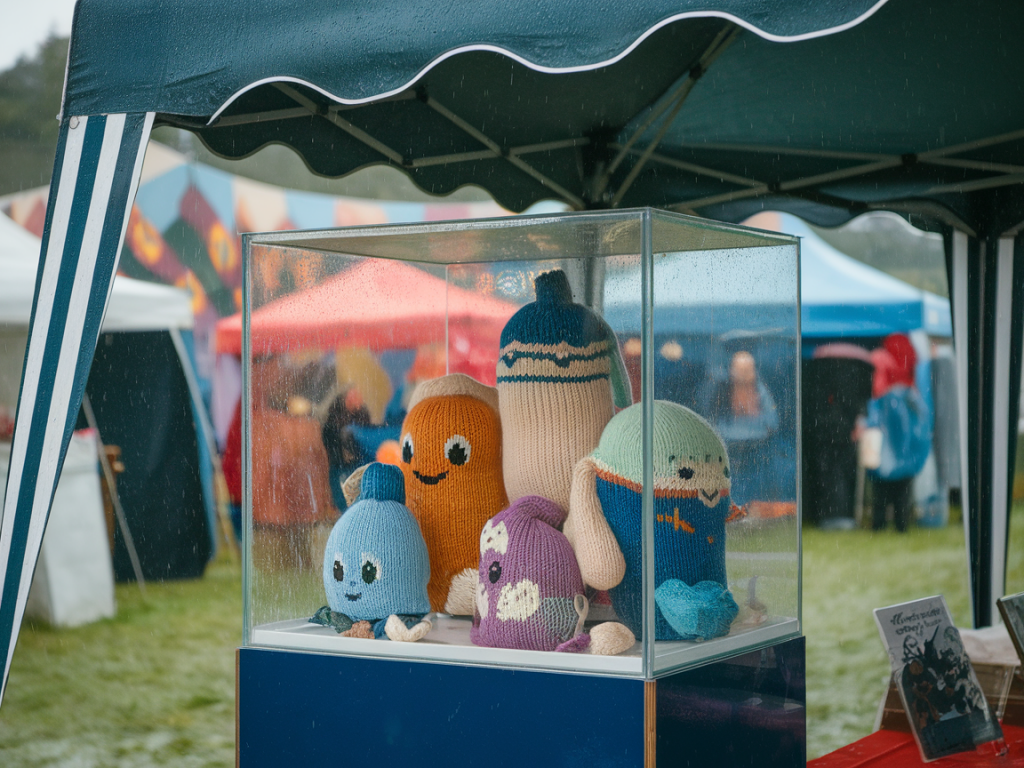
Rain is the festival’s uninvited guest: one minute you’re arranging a tiny woollen fiddler on a gingham cloth, the next you’re tucking everything under a tarp and praying the colours don’t run. Over the years I’ve learned that the right display case makes the difference between a soggy disaster and a show that still sings in the downpour. Here I’ll walk you through lightweight, festival-friendly options that protect delicate knitted characters from rain, wind and curious hands — without turning them into museum exhibits behind impenetrable glass.
What matters most in a festival display case?
When you’re choosing a case for outdoor, rainy conditions, think of four practical priorities:
Weather protection: Keep water out while avoiding humidity traps.Visibility: Maximise clarity so the stitches, buttons and tiny expressions are readable from a stall front.Portability: Lightweight, flat-packing or easy-to-carry are musts for market days and festival travel.Access and handling: Quick in-and-out for sales or curious children, plus the ability to secure pieces when you want to lock up.Balancing those needs means accepting small trade-offs: the clearest plastics are often heavier or more brittle; the most breathable covers can let spray in. My aim here is practical middle-ground choices that have kept my knitted characters dry and visible at countless village fêtes and muddy folk festivals.
Materials and why they matter
Not all clear plastics are the same. Here are the main contenders and how they behave outdoors:
Acrylic (Plexiglass/Perspex): Very clear, lightweight and scratch-resistant to some extent. It can crack if dropped and can bow in heat. Good for small, rigid display cubes or lids.Polycarbonate: More impact-resistant than acrylic and less likely to shatter, but slightly less optically perfect and often pricier. Useful if your stall is fast-and-busy with lots of handling.PETG: A softer, flexible clear plastic used in many portable display boxes. It resists cracking and can be folded in some designs. Good compromise for travel.Clear vinyl/PVC (soft): Extremely portable and flexible — think roll-up covers or window panels — but it can fog up and scratch easily. Use for quick temporary shelter rather than precious heirlooms.For knitted characters I favour acrylic or PETG for the main viewing panels and soft vinyl for outer, roll-up weather flaps. That gives good clarity with a secondary layer to stop sideways spray.
Types of lightweight festival-friendly display cases
Here are formats that work well in a stall environment, with notes on pros and cons.
Acrylic display cubes with detachable lids — classic, tidy, very visible. Choose cubes where the lid fits snugly and the base has a slight lip so a little towel or absorbent card can sit underneath. Pros: clean look, great visibility. Cons: can be brittle if dropped, and they take up flat space for transport.Fold-flat PETG boxes — many makers sell foldable clear boxes designed for transport. They assemble quickly, stack for display, and are lighter than rigid acrylic. Pros: portable and impact-resistant. Cons: seams may allow some drizzle in; better combined with a secondary cover.Clear-top wooden bases — a wooden pedestal with a clear acrylic or polycarbonate dome. Pros: charming, stable and protective; bases can be weighted. Cons: heavier than pure plastic options, slightly more work to pack.Roll-up clear vinyl fronts — these are essentially window-flaps for your stall that zip or Velcro onto a frame. Pros: shelter whole stall area and allow immediate access. Cons: visibility can be muted on rainy days and vinyl may fog if humid.Lightweight pop-up display cases — think of small, tent-like pop-ups with mesh sides and a clear window panel. Pros: excellent ventilation (reduces humidity), easy setup. Cons: less formal presentation and less protection from horizontal rain.Practical features to look for
When you’re comparing specific products or planning a DIY build, keep an eye out for these details:
Sealed seams or overlapping lids: A small lip or gasket where the lid meets the base makes a huge difference in sideways rain.Ventilation or desiccant space: If a case is totally airtight, moisture from damp textiles can condense. Leave a tiny gap or tuck in a silica gel pack to keep humidity down.Anti-glare coating: Outdoor light is unpredictable; anti-glare or matte-finish edges can make your characters readable even under festival lighting.Straps and handles: Cases that clip or strap into place on a table are less likely to blow away. Removable shoulder straps help you carry multiple cases between events.Modular stacking: Having boxes that stack securely makes it easy to create levels without extra stands.Examples and real-life tips from the field
I’ve used a mix of ready-made and home-adapted solutions. A few practical notes from kitchens, marquees and muddy fields:
For small brooch-sized characters I use acrylic cube cases (100–150mm) with a narrow timber base. I glue a thin strip of foam inside the base to cushion and secure each piece. The timber base gives weight and a hand-painted label space.For larger dolls I favour fold-flat PETG boxes. They pack two or three to a flat A4 folder, and at festivals I line the base with absorbent paper and a sachet of silica gel. If rain is forecast I add a transparent roll-up flap to the front of the stall so spray doesn’t come in at an angle.On windy days I secure cases to the table with museum putty or small elastic cords looped under the table. A tiny tent peg through the elastic works wonders for stalls with soft ground.If you need hands-on sales (trying on, close inspection) keep a small, locked “interaction box”: an open-fronted acrylic shell with a hinged top that you can quickly lift open, hand the item through, then close. It’s efficient and feels less formal than a full glass case.DIY quick-build: a festival-ready viewing box
Here’s a simple, portable pattern I return to:
Materials: fold-flat PETG box (choose size), thin wooden base board, foam sheet, clear roll-up PVC flap, two silica gel sachets, elastic straps with clips.Assembly: glue foam to the wooden base; place silica packs under the foam; clip PETG sides into base; attach roll-up PVC to the top table edge with Velcro so it can be dropped down over the front when needed; use elastic straps to anchor the box to the table underside.This setup stays light in the van, assembles in minutes and gives both seeing and breathing space for delicate yarn faces.
Costs and where to look
Expect to spend anywhere from modest sums for simple vinyl roll-ups (£10–£30) to £30–£100 for quality acrylic cubes or PETG foldables, and more for bespoke domes or wooden-base displays. Look at craft supply sellers, museum supply stores, or the “acrylic display case” listings from mainstream retailers. Local sign-makers or a framer can cut bespoke acrylic or polycarbonate to size at decent prices if you want a custom look without museum-level expense.