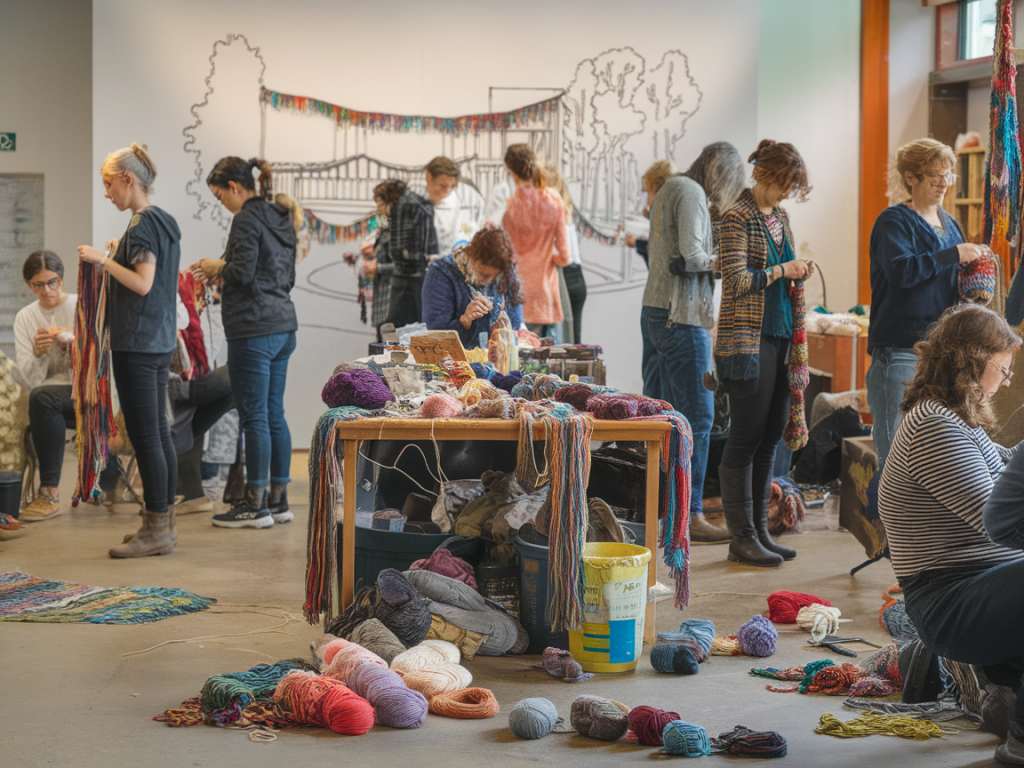
There’s a particular hush in the hour before a yarn-bombing goes live — the kettle boils, the last wrist warmers go on, and a band of volunteers hunch under a bridge or around a lamppost, threading colourful sleeves onto cold metal. Over the years I’ve helped organise several community yarn-bombs at village fêtes and festival fringes, and the part that surprises people most is not the knitting itself but the web of permissions and people-management that makes it possible. In this piece I’ll walk you through how I plan a yarn-bomb from the paperwork to the party, with practical tips I’ve learned the hard way.
Why permissions matter (and how to start)
Yarn-bombing feels whimsical and harmless, but it takes place in public space and often on council-owned fixtures, so permission is the foundation. Before you get too invested in a colour palette, contact the local council or asset owner. This could be the parish council, highways department, a parks team, or private landowners if you’re near a business or festival site. Explain your concept clearly: location, duration, materials, and who’s responsible for installation and removal.
Some councils are delighted — they see it as community engagement and placemaking. Others worry about safety, litter, or the precedent it sets. Come prepared: offer a written plan, dates, contact details, and a commitment to tidy up. I always ask what documentation they need; some request a simple letter, others ask for public liability insurance for large installations. If insurance is required, local arts organisations, community centres, or your festival’s organiser may be able to extend cover.
Mapping the site and assessing risks
Once permission is in place, do a walk-through with the team. Look for potential snag points — sharp edges, moving parts, or areas that attract wildlife. Consider weather exposure: wool gets heavy and sodden when wet, and some synthetic yarns fare better for longer displays. Avoid wrapping anything where it could obstruct signage, road visibility, or maintenance access.
I use a simple risk checklist during site visits:
Make notes and take photos. These will be invaluable to council officers, volunteers who can’t attend the visit, and your insurance provider if questions arise.
Recruiting and organising volunteers
Volunteers make a yarn-bomb breathe; they bring diverse skills — knitting, crocheting, graffiti-safe patching, logistics, and photography. I find people through local knitting groups, community Facebook pages, festival volunteer rosters, and word-of-mouth at craft markets. Be clear in your callout about what you need: pattern knitters, on-site installers, stewards to speak with passersby, and someone to document the event.
Arrange a short volunteer briefing before the day. Cover:
Assigning small teams with a leader keeps things calm. One leader steers the knitting crew, another liaises with council reps and festival organisers, and a third coordinates installation. Volunteers appreciate structure; it helps them feel useful rather than overwhelmed.
Materials, techniques and sustainable choices
Choose yarns with the installation’s life-span in mind. Acrylic is weather-resistant and vibrant, but it’s plastic; wool has wonderful texture and biodegrades but can stretch when wet. For mixed installations I often use a wool-acrylic blend to balance feel and resilience. Brand-wise, affordable DK from King Cole or Stylecraft is easy to source for large community projects. For smaller, delicate work, Rowan or Debbie Bliss bring lovely handfeel.
Think modular: knit panels or sleeves that can be attached and removed individually. This makes transport and maintenance easier and means a damaged piece can be swapped without dismantling the whole display.
| Item | Purpose |
| Yarn (varied fibres) | Panels, sleeves, motifs |
| Zip ties & velcro straps | Secure without damaging fixtures |
| Garden twine | Temporary support during installation |
| Scissors & glove leather | Safe cutting and hand protection |
| High-vis vests | For volunteers near roads |
Installation day: choreography and communications
The key to a smooth install is choreography. I prepare an order of operations and a simple site map: who does which pole, where the toolboxes go, and where volunteers can warm up with tea. Start early to avoid peak footfall and coordinate with council maintenance if they need to close a pavement briefly.
Communications matter. One volunteer should be the public face, answering friendly questions about sustainability, craft, and the story behind the project. I find that sharing the yarn-bomb’s narrative — who knitted what and why — disarms suspicion and invites connection. Bring printed placards that explain the project and list contact info in case the public wants to report damage or concerns.
Maintenance and longevity
Create a maintenance rota. Regular checks during wet weather can prevent sagging or tearing. Tie-offs can loosen with wind; zip ties and a simple knotting technique (a double half-hitch works well) keep things secure. If a council has agreed to the project, confirm with them whether they want periodic reports or a mid-display check-in.
Pack-up and reuse
Plan for removal before you put up the first stitch. Committing to a removal date reassures stakeholders and sets expectations. When taking pieces down, gather as many fibres and components as possible for reuse. Rehome knitted panels at community centres, charity shops, or transform them into cushions and festival banners. Recycling yarn through organisations like Planet Wools or local upcycling groups is a sustainable option.
Finally, document everything. Photos, volunteer reflections, and a short report to the council help smooth the way for future projects and build a case that yarn-bombs can enrich community space rather than clutter it. Above all, treat the process as a collaborative story: people, permissions, and practicalities woven together, stitch by careful stitch.