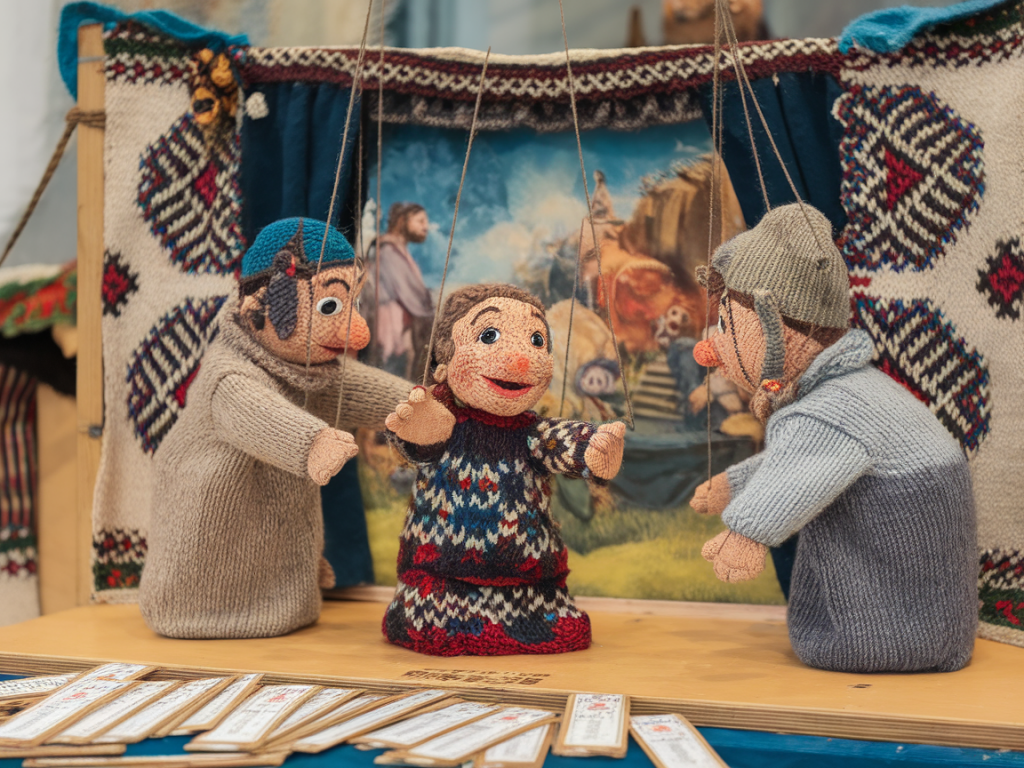
I once stood in a damp village hall, clutching a box of knitted puppets that smelled faintly of lavender and wool. That night I watched a rapt audience lean forward as a ten-minute puppet retelling of an old local tale unfolded under a lamp. When the applause came, people reached for their coats and their wallets—tickets sold out, and several asked when the next show would be. So yes: you can turn a local folk tale into a 10-minute knitted puppet show that sells tickets. But "yes" comes with craft, care, and a sprinkle of marketing. Here’s how I approach it, step by practical step.
Choose the right tale
Not every folk tale compresses neatly into ten minutes. The ones that work well tend to have:
- Clear arc: a beginning that sets stakes, a single central conflict, and a satisfying resolution.
- Strong, small cast: ideally 2–4 characters you can represent with knitted figures.
- Distinct imagery: sensory or symbolic moments that translate well into visual and tactile puppetry.
When I pick a tale, I look for scenes that can be shown rather than told. If your story is mostly exposition, think about reframing it through dialogue, a repeating motif, or a single dramatic beat (a chase, a bargain, a dance).
Permissions and ethics
Many folk tales are in the public domain, especially older regional stories, but you must be cautious if a story has been recently published by someone who collected or adapted it. Ask questions:
- Is this a well-known oral tale from the community, or a modern retelling with a named author?
- Do you need permission from a storyteller or community custodian?
Approach the community with humility. I always explain my intent, offer credit, and, if possible, share ticket revenue or offer free community performances. This builds trust and enriches the performance with cultural legitimacy.
Script in ten minutes
Ten minutes is deceptively short. My script process is surgical: cut anything that doesn't push the plot forward. A common structure I use:
- 30–60 seconds: hook (a strange event, a character’s problem)
- 3–4 minutes: rising action (complications, a small series of beats)
- 3 minutes: climax (confrontation or transformation)
- 1–2 minutes: wrap and final image
Use repeated lines or a simple chorus to create rhythm and memory. Puppets are tactile and visual, so shorten long speeches into gestures, sound effects, or knitted props. I write in beats rather than pages—each beat corresponds to a puppet exchange or a physical action.
Puppet design and practicalities
Your knitted characters are the show’s heartbeat. I prioritize:
- Readability: bold colours or distinctive accessories (a red scarf, a felt hat) that read from the back row.
- Manipulability: lightweight stuffing, simple jointing, and gloves or handles so puppeteers can be quick and expressive.
- Durability: use sturdy yarns (a DK or worsted wool blend), reinforced seams, and washable components for repeat shows.
Accessories are storytelling tools. A knitted lantern with an LED tea light becomes a magical object. A tiny hand-stitched letter can carry the plot. I often sketch puppet silhouettes first and make prototypes in cheaper yarns—Ravelry is a good place for inspiration and pattern snippets.
Staging a 10-minute show
Space is key. A village hall, pub room, or a festival gazebo can all work if you plan sightlines and sound. For a ten-minute slot:
- Keep a compact set—one or two backdrop pieces (a painted cloth or knitted banner) that swap quickly.
- Plan blackouts or a simple curtain for quick scene changes. A felt screen works well for small stages.
- Use live scored sound or a tiny pre-recorded backing track—folk instruments like concertina or fiddle add atmosphere. A battery-powered speaker (JBL Flip or similar) is handy on the road.
I also rehearse transitions more than lines. The magic is in the handoffs: puppet in, puppet out, music swell, blackout. Ten minutes leaves no margin for fumbles.
Pricing and ticketing
Short show, full value: audiences will pay for quality and experience. Consider these models:
- Pay-what-you-can for community slots, suggested donation for pubs or markets.
- Fixed ticket (£6–£12) for seated, ticketed village hall or festival fringe slots.
- Bundle: combine with a short workshop (knit-a-mini-eye) or a tea-and-biscuits social to increase perceived value.
Use Eventbrite or Brown Paper Tickets for simple online sales, or take cash at a market stall. If you're working with a festival, negotiate a fee plus a stall or merch split. I make a small run of souvenir knitted pins or postcard programs—these are cheap to produce and boost revenue.
Marketing that sells
Ten minutes needs a compelling hook. Your blurb should answer: What makes this tale special? Why now? Where does the knitted element matter? Use photos of the puppets (close-ups, hands-in-action) on social media and your ticket page. Tag local festival accounts, village Facebook groups, and makers’ networks—people love a handcrafted angle.
Offer a behind-the-scenes rehearsal clip (30–60 seconds) to create intimacy. I post a short video of me sewing a puppet’s eyebrow with the caption: “This little stitch decides the whole mood.” People buy into process as much as product.
Rehearse and iterate
Perform a few free show-and-tells: a school assembly, a coffee morning, a friends’ evening. These are your lab sessions. Time each beat, note where eyes glaze, and where laughter lands. Tighten language, increase visual variety, and trim any scene that slows momentum.
Finally, keep a logbook of audience reactions and sales so you know what works. Ten minutes is tiny but powerful: with a resonant tale, a handful of knitted characters, and clear, warm marketing, you can create a ticketed experience that feels both intimate and festival-ready.