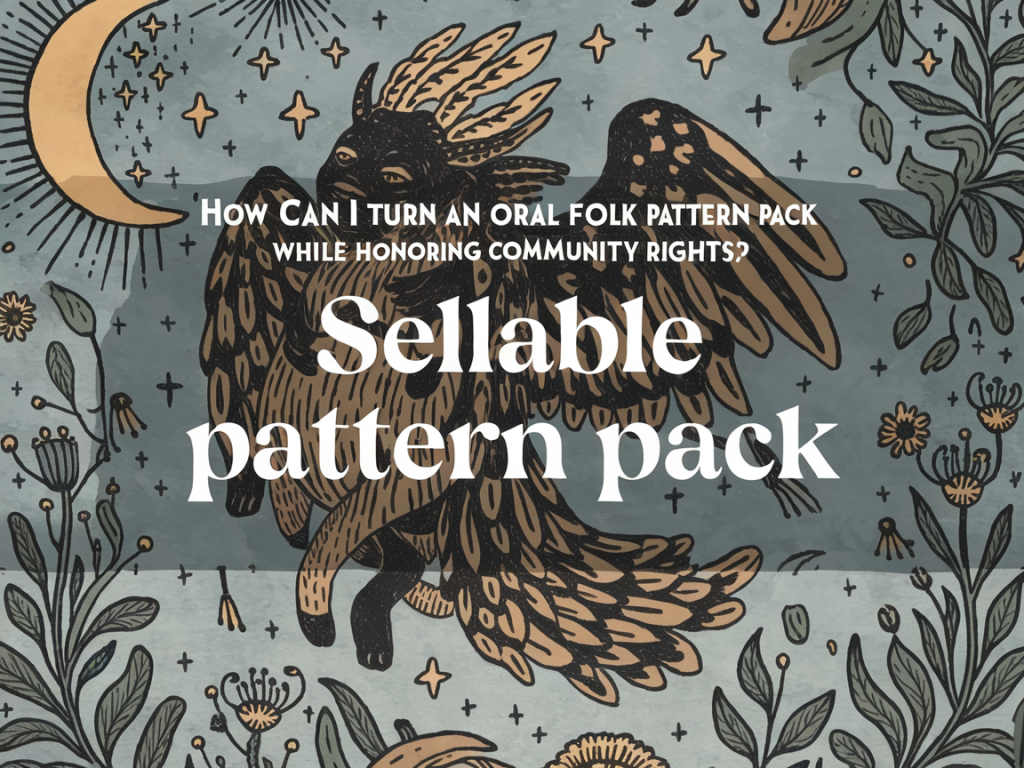
I often get asked how I turn a whispered folk tale heard at the back of a festival field into a tidy, sellable pattern pack without flattening the story or stepping on the community that carried it. It’s a question that sits at the intersection of craft, ethics, and small-business practicality—and every time I answer it I think about the people, not just the pattern. Below I walk through the practical steps I use when adapting oral folk tales into knitted-character pattern packs, with attention to community rights, attribution, and fair sharing of benefits.
Start with listening, not taking
When a tale sparks an idea for a character, my first move is to return to the source. That might mean going back to a teller at the next festival, contacting a local heritage group, or seeking out community elders. I ask questions about the story’s origin, variations, who in the community considers the tale theirs, and whether it’s appropriate to adapt or share outside the group.
Consent is not a one-off checkbox. It looks like a conversation where the community can say yes, no, or yes-with-conditions. Often those conditions are simple: attribution, a contribution to community projects, or a say in how the character is represented.
Determine whether the tale is in the public domain
Many folk tales are ancient and widely circulated, which can make them effectively in the public domain. But oral traditions carry context, performance styles, and particular variants that belong to communities. I always distinguish between:
For locally specific tales, even if no statute protects them, I treat them as community-owned and proceed with consent and compensation in mind.
Negotiate rights and revenue sharing up front
If the story is tied to a living community, I draft a simple written agreement before I publish anything. This does not have to be a thick legal contract—sometimes a clear, friendly email suffices—but I include:
Many community partners appreciate a small, ongoing contribution—5–20% of profits, a fixed fee, or in-kind support like workshop resources or festival sponsorship. Be transparent about numbers. If you’re selling a pattern pack on Etsy, Ravelry, or Gumroad, estimate costs and revenue so the split is fair.
Translate story elements into design, respectfully
Rather than reproducing sacred symbols or private ritual details, I focus on mood, motifs, and characters’ personalities. For instance, if a tale centers on a wise miller who speaks to birds, I might design a miller character with bird companions and knitted motifs inspired by local stitch patterns—after checking whether those patterns are shared openly or considered culturally sensitive.
Practical knitting tip: use a signature stitch or color palette inspired by the tale’s landscape (e.g., moss greens and heathers for a moorland story). Include a short “maker’s note” in the pattern pack explaining the inspiration and the respectful choices you made—this educates buyers and models ethical creativity.
Attribute clearly and tell the story in the pack
Buyers of pattern packs love the story behind the stitch. Include:
This transparency builds trust. If a community asked to remain unnamed, say so: “This version is adapted with permission from a storyteller in [region].”
Choose platforms and pricing with ethics in mind
Where you sell matters. Ravelry and Etsy are popular for pattern packs; Gumroad and your own site can give you more control over files and payouts. When pricing, factor in:
I often include a clear line item in my shop listing: “A portion of proceeds supports [community group]” with a link. This builds confidence and helps buyers feel part of ethical consumption.
Offer collaborative options: workshops, co-authored patterns, and digital bonuses
Collaboration can take many forms beyond a payment split. Consider:
These options deepen the relationship and give back in ways that money alone sometimes cannot.
Protect cultural intellectual property with common-sense agreements
Here’s a simple template table I use to clarify terms before I start producing patterns:
| Item | Notes |
|---|---|
| Source | Name of teller/community; contact details or “anonymous at request” |
| Permission | Adaptation for sale: yes/no; conditions |
| Attribution | How the community/teller is credited in the pack |
| Revenue share | Percentage, flat fee, or in-kind compensation |
| Restrictions | Uses that are restricted (no trademarking, no commercial reselling of the story text) |
| Duration | How long the agreement applies and review points |
Pattern testing, accessibility and cultural care
Pattern testing should include testers from different skill levels and—if possible—representatives from the storyteller’s community. Ask testers to flag anything that might feel inaccurate or offensive. Also ensure your instructions are clear and accessible: include multiple sizes for characters, materials substitutes, and step-by-step photos or charts.
Be ready to adapt or withdraw if concerns arise
Even with consent, community feelings can shift. If a community asks you to stop selling a pack or change how it’s presented, be prepared to act quickly and respectfully. Offer refunds where appropriate, and explain your actions publicly in a way that centers the community’s voice, not defending yourself.
Turning an oral folk tale into a sellable pattern pack is less about extraction and more about partnership. When I treat storytellers and communities as collaborators rather than content sources, the patterns I create carry not just stitches and instructions, but relationships and responsibility. That’s the kind of work I’m proud to put my needles—and my name—behind.