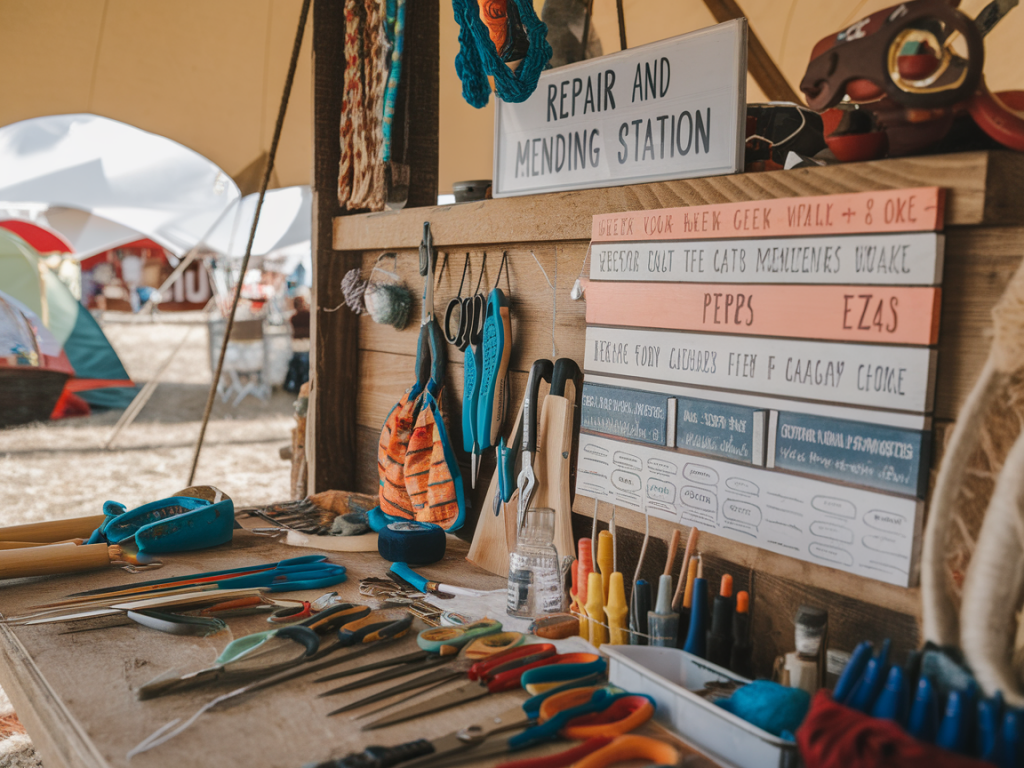
I’ve run a pop-up repair and mending station at handfuls of folk festivals and maker markets, and each time I set up I’m reminded how much people light up when they see their favourite woolly jumper or a beloved festival flag given a second life. A well-planned station is part practical workshop, part welcome booth — it fixes things and it invites stories. Below I share a blueprint I use, from the tools and layout to signage wording and sensible pricing, so you can build a repair station that hums with craft and community.
Where to place your station and how to layout the space
Location matters. Aim for a spot near the entrance to maker areas or close to busy thoroughfares where festival-goers pass between stages and food stalls. You want visibility and foot traffic without being swallowed by noise. At smaller village fêtes, a corner of the craft tent works beautifully; at larger festivals, a marquee near the children’s area or family camping is ideal.
My preferred layout is a linear table with a sitting bench for the mender and a couple of stools for visitors. Keep a 1.5–2 metre clear zone for people to queue comfortably. Here’s a simple floor plan I sketch in my notebook before packing:
| Area | Notes |
|---|---|
| Front counter | Signage, price list, small display of mending examples |
| Work table | Large enough for a sewing box, iron (if using), and two trained hands |
| Staging/holding area | Boxes for in-progress and ready-to-collect items |
| Scrap and recycling | Separate bins for yarn offcuts, buttons, recyclable packaging |
Essential tools and kit
Pack a well-organised toolbox. I use a sturdy metal tin for needles and small bits, and a lightweight folding table so set-up is quick. Think about different fibres and typical festival damage — pulls, holes, popped seams, lost buttons, zipper issues.
- Needles: darning needles, tapestry needles, and a selection of sharp sewing needles (size 7–10).
- Threads and yarn: polyester & cotton thread in neutral tones, plus small balls of dk and aran-weight yarns for visible darning. I carry a few skeins of Cascade 220 and some leftover hand-dyed yarns for characterful patches.
- Buttons & fastenings: a small organiser box with an assortment — metal snaps, coconut-style buttons, wooden toggles, and a few bright novelty buttons for kids.
- Small tools: scissors, thread snips, pliers for stubborn zips, seam ripper, measuring tape, buttonhole chisel.
- Ironing & blocking: travel steam iron or steam generator (if permitted), a foldable small ironing board or clean towel for gentle pressing.
- Patches & adhesive: fabric mending patches, Fray Check, and a small tube of textile glue for emergency fixes.
- Sanitation: hand sanitiser, disinfectant wipes, a small first-aid kit, and masks if requested.
Signage: what to say and how to say it
Signage should be welcoming, clear and small enough to read across a few metres. I favour hand-written chalkboard signs for atmosphere, but printed A3 sheets are fine for clarity. Keep text direct and friendly. Examples I’ve used:
- “Repair & Mending Station — Bring your beloved knits back to life”
- “Quick Fixes: buttons, holes, zips — while you wait”
- “Bespoke Darning & Visible Mending — Book a 20-minute slot”
- “Donate buttons & yarn offcuts — help us keep repairs affordable”
Include practical info: opening hours, how to pay (card/cash/PayPal/QR), expected turnaround times and whether you accept drop-offs. A small placard with a photo gallery of before-and-after repairs works wonders for trust and curiosity.
Suggested pricing model and examples
Pricing at festivals needs to be transparent and flexible. I split services into “quick fixes” (while-you-wait) and “bespoke repairs” (takeaway, same-day or next-day). Keep rates approachable — the aim is community service as much as income.
| Service | Typical time | Suggested price (GBP) |
|---|---|---|
| Button sewn on | 5–10 minutes | £3–£6 |
| Small seam repair (hand) | 10–20 minutes | £6–£12 |
| Visible darning (small hole) | 20–40 minutes | £12–£25 |
| Re-knit cuff/edge (simple) | 1–2 hours (takeaway) | £30–£60 |
| Zip replacement | 30–60 minutes | £20–£45 |
Factors to adjust for: festival location (urban vs rural), festival ticket price, and the typical demographic. Always indicate a starting price and explain that complex items (vintage pieces, mixed fibres) may incur higher fees. Offer a small discount for children’s garments and festival staff/volunteers to build goodwill.
Staffing, bookings and time management
A single experienced mender can happily run a modest station, but for busy festivals aim for two people: one to take bookings, handle payments and greet visitors; one to mend. Use a simple booking system — a paper appointment pad is charming and reliable, but a tablet with Bookwhen or a Google Calendar works well too.
- Reserve 15–30 minute slots for visible darning to avoid bottlenecks.
- Offer a “while-you-wait” option for very small tasks; set expectation that more complicated work is collected later.
- Keep a clear ticketing system: name, mobile, item description, expected collection time.
Sourcing materials and sustainability
Source recycled or deadstock yarns where possible. I’ve partnered with local yarn shops and festivals to collect donated offcuts — it saves money and creates a visible message about circular craft. Brands like Jamieson & Smith offer heritage yarns that suit visible mending aesthetics, while smaller indie dyers often donate sample skeins at maker events.
Encourage patrons to bring their own materials when they can; offer to recommend colour and weight matches. Keep a small “swap shelf” for buttons and spare yarn so visitors can contribute and pick up bits for free.
Accessibility, safety and festival rules
Make sure your stall is wheelchair accessible and that seating is comfortable for older hands. Label any hot tools (irons, steamers) and keep them on a separate, clearly marked station. Check festival rules about heat sources and sharp tools — some events require tool storage when unattended.
Finally, signage about Covid and health safety is still appreciated by many. Keep hand sanitiser prominently available and be clear about any requirements you have for face coverings during close work.
Running a repair station is one of the most rewarding ways to connect with makers, listeners, and festival-goers. It’s practical, social, and quietly radical: each darned elbow or reattached button is a small act of resistance against throwaway culture, and a chance to hear the stories stitched into our belongings.