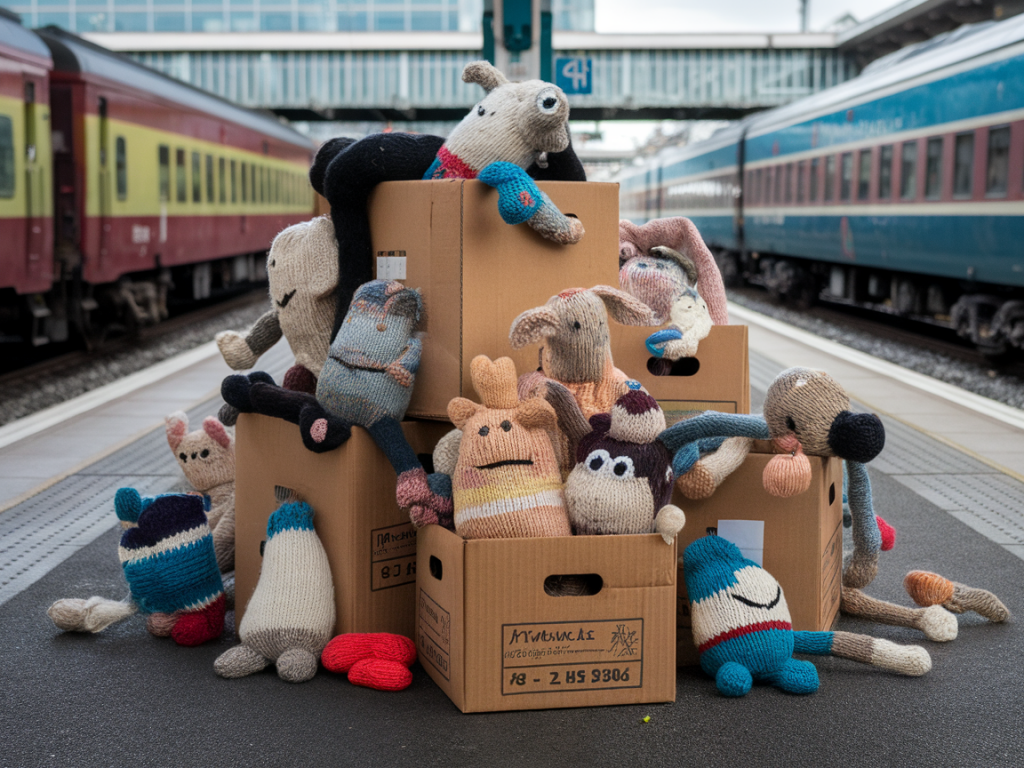
Shipping fragile knitted characters by train across the UK feels like sending a small, breathing piece of my festival stall out into the world. I’ve done it enough times to know that despite careful crafting and sentimental care, packages can meet a bumpy journey: changes of hands, station platforms, luggage racks, and damp weather. Over the years I’ve learned what vendors often forget — the tiny but crucial details that turn an anxious dispatch into a relaxed arrival. Below I share a practical, tested checklist and the little tips most makers miss when sending delicate knitted characters by rail.
Why choose train for shipping?
I usually choose train travel for shipping between festival towns because it can be faster than road haulage for some routes, kinder to the environment than van couriers, and often less expensive for short to medium distances. But trains introduce their own variables: station handling, potential delays, and multiple handovers if parcels move into national courier networks at either end. Preparing for those variables is what keeps fragile stuffed faces from getting squashed.
Common mistakes vendors make
- Using the wrong box size — too big and the character shifts; too small and stuffing gets crushed.
- Relying on bubble wrap alone — brittle beads, fragile embroidered features, or sequin eyes need specialised support.
- Not considering moisture — steam trains, rainy platforms, or damp storage can affect wool and natural fibres.
- Skipping clear handling instructions — a “Fragile” sticker isn’t enough if handlers don't see the correct orientation or soft parts.
- Failing to stage a trial run — many of us assume our packaging is fine until it isn’t.
Detailed checklist most vendors miss
Think of the checklist below as the extra layer of care you add after you’ve knitted, stuffed, and dressed your character. I always print one copy to keep and one to include with the parcel.
- Internal support structure: Use a lightweight internal skeleton if the character has extended limbs or a heavy head — a cardboard tube, foam rods, or pipe insulation can prevent flopping.
- Stabilise delicate features: Sew on eyes, noses, and accessories with locking knots and, when necessary, a dab of fabric glue hidden under the stitches for extra security.
- Use acid-free tissue: Wrap the character in acid-free tissue paper before any cushioning. It prevents colour transfer and protects delicate embroidery.
- Double-bag for moisture: Place the wrapped character in a resealable polyethylene bag, then in a second bag with a silica gel sachet to control humidity during transit.
- Choose the right box size: The box should leave 2–4 cm of space around the character for cushioning without allowing it to move freely.
- Layered cushioning: Use crumpled kraft paper, corrugated cardboard pads, or biodegradable packing peanuts around the character; avoid compressed bubble wrap that can localise pressure points.
- Shock indicators: Consider using a simple impact indicator sticker (e.g., ShockWatch) for very fragile items to prove the parcel was mishandled.
- Orientation markings: Mark “This way up” and “Fragile — soft toy enclosed” and indicate which parts are delicate (e.g., “Do not place heavy items on head”).
- Secure loose parts separately: If hats, props, or tiny instruments can detach, bag them and fasten them inside the parcel to a flat board so they don’t rattle and get lost.
- Include a repair kit: For festival sales where a drop-off repair could be arranged, include a small emergency repair kit: matching yarn, a needle, spare buttons or beads, and a quick instruction card.
- Documentation and photos: Photograph the finished toy from several angles and the packaged item before dispatch. Save these in case you need to claim damage or prove condition on handover.
- Insure and track: Don’t skip insurance for high-value pieces. Always choose a tracked service with a guaranteed delivery window on routes where timing matters.
- Clear recipient instructions: For festival pick-ups, include clear instructions about collection times, who will accept the parcel, and an emergency mobile number.
- Label with material info: Add a small card inside the package listing fibre content and washing/care instructions (useful for handlers and buyers).
- Test before you commit: Do a trial send within your local area to test the packaging on the same train network you’ll be using for longer routes.
Packaging materials table
| Item | Why | What to use |
|---|---|---|
| Acid-free tissue | Protects fibres and embroidery from abrasion and staining | Conservation-grade tissue paper |
| Resealable polyethylene bags + silica gel | Moisture control | Zip-lock bags, silica gel sachets |
| Corrugated cardboard pads | Even pressure distribution, prevents crushing | Double-wall corrugated cardboard |
| Impact indicator | Shows if parcel has been dropped | ShockWatch or similar single-use sticker |
| Biodegradable stuffing | Cushions without plastic residue | Recycled crumpled paper, cornstarch peanuts |
Practical tips for station handovers and festivals
- Book early collection: Arrange for parcels to be collected from a staffed ticket office or customer service desk rather than left at an unstaffed drop box.
- Communicate with the recipient: Send them photos of the parcel and clear pick-up instructions — festival organisers appreciate an exact parcel description to speed collection.
- Use consistent labelling: Put a duplicate label inside the package with the recipient’s address and your return info in case the outer label is damaged.
- Plan for delays: If the parcel is time-sensitive, allow an extra day in your schedule in case of strikes or weather-related disruptions; include a note to the buyer telling them to expect potential delays.
- Consider station-to-station services: Some rail companies and independent carriers offer dedicated station-to-station parcel services which reduce handling; ask your local station about options.
Stuffing, weight distribution and pose
The way a character is stuffed affects how it survives the journey. Firm stuffing can keep a shape but can also make pressure points if the box is squeezed. I prefer slightly softer stuffing with internal supports for heads and joints — it gives a bit of give if someone stacks a parcel on top. If your creature has a heavy head, anchor it to a flat board wrapped in tissue so it keeps an upright pose.
What to do if something goes wrong
- Keep all photos and shipping receipts; they’re essential for claims.
- Contact the carrier immediately with tracking details and the photos you took pre-shipment.
- Offer the buyer a repair option — I sometimes send a repair kit and a short how-to video to help them fix minor squashes at home.
There’s an intimacy in sending a knitted character to a new home, and a little forethought makes the difference between a deflated toy and a delighted customer unwrapping their new festival companion. I always say: test, document, and communicate — and never underestimate the comfort a spare button and a bit of matching yarn can bring to someone at the other end.