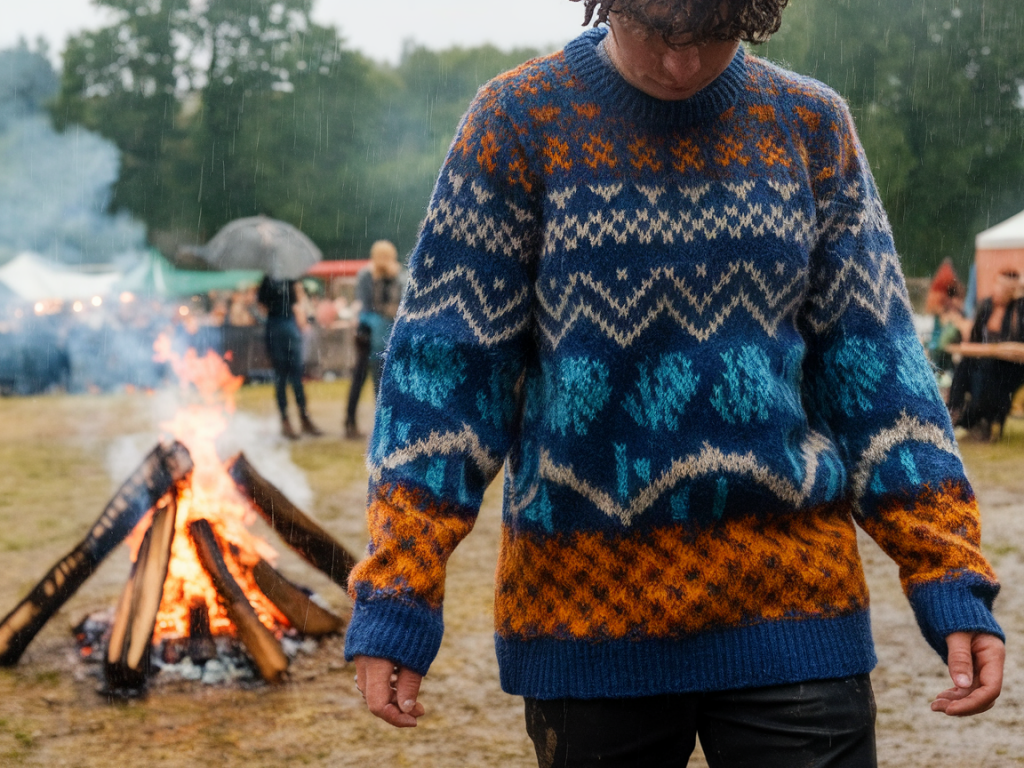
I once sat up late in a field behind a folk stage, socks rolled down, a mug of lukewarm tea in one hand and a half-finished knitted gnome in the other, while the smell of smoky embers and damp canvas hung in the air. That gnome — and several other small characters I carry from festival to festival — taught me a lot about what really matters in yarn when you want something that survives campfire smoke, rain, mud and the everyday knock-about life of a travelling maker.
What makes a yarn “festival-proof”?
Before recommending brands, it helps to be clear about the properties we need. From my experience:
Smoke and odour resistance: Wool generally performs better than synthetics — wool fibres are more breathable and contain lanolin, which helps trap and release oils rather than permanently holding smoky particulates.Water behaviour: Some wools are naturally water-resistant to a degree (lanolin), but heavy rain soaks most fibred garments; construction and yarn twist matter a lot.Abrasion and snag resistance: Festival gear gets bashed about. Blends with a little nylon or tightly spun yarns hold up best.Heat and safety: Stay away from pure synthetics when you’ll be near open flames — they can melt or carry heat differently than natural fibres.Affordable British yarns I recommend — and why
Here are yarns I’ve used in the field, tested by actual festivals rather than just swatching by the firepit.
| Yarn | Fiber | Price tier | Why I like it | Limitations |
| West Yorkshire Spinners Signature DK / Roundhay DK | 100% British wool (varies by line) | Affordable-mid | Made from British fleece; breathes well, good stitch definition, pleasantly sturdy for toys and accessories | Some colours are superwash-treated; check label if you want untreated wool |
| Stylecraft Special DK | Acrylic (and other blends in the range) | Very affordable | Hard-wearing, machine-washable, huge colour range, inexpensive for large festival banners or bunting | Holds surface odours and can be unsafe near open flames |
| King Cole Reno / Sirdar Hayfield (DK/Aran ranges) | Wool blends (often wool/acro/nylon mixes) | Affordable | Good balance of warmth, durability and price; blends add strength and easier care | Blends vary; some still absorb smoke more than pure wool |
| John Arbon Textiles (4ply/DK ranges) | British wool and blends | Mid | Lovely rustic texture and ethically produced; great for rustic festival characters and robust wear | Pricier than supermarket acrylics |
Practical trade-offs: wool vs acrylic vs blends
In short: wool wins for odour handling and heat behaviour, acrylic wins for price and washability, and blends often give the best compromise.
Wool (untreated / non-superwash): Won’t cling to smoky smells as stubbornly as acrylic. Lanolin helps beads of water sit on the surface for a while, and the fibre structure is flame-resistant — it chars more slowly than synthetics. Downsides: hand-wash care (unless you like felting) and sometimes higher cost.Superwash wool: Easier to machine wash but often chemically treated to remove lanolin; that treatment can reduce some of wool’s natural odour-handling and water behaviour.Acrylic: Cheap and cheerful, great for bunting, costumes and anything that will be washed often. But it tends to trap smoky particulates on the surface and can smell stubbornly of campfire unless thoroughly cleaned. Also avoid wearing it dangerously close to flames.Blends (wool + nylon / acrylic): Add durability and abrasion resistance. A small percentage of nylon helps knitted toys survive being dropped and pulled by small, festival-laden hands.Construction matters as much as fibre
No matter how good the yarn, how you stitch and finish your piece makes a huge difference:
Tightly plied yarns: Resist snagging and abrasion better than loosely spun yarn. They also hold up to repeated handling.Dense stitch patterns: For festival-worn items, tighter fabric (smaller needles, denser stitch) keeps mud and wind at bay.Fully blocked and reinforced seams: Toys and satchels need strong joins. I use mattress stitch and reinforce stress points with a small whipstitch and occasionally a discreet dot of textile glue inside the seam for extra security.Field-care tips — how to remove smoke and dry things fast
From damp tents and smoky cloaks to mud-splattered scarves, here are methods that worked for me between stages:
Air and sunlight: The oldest trick — lay things out in a shady, breezy spot (direct strong sunlight can fade colours). Fresh air and UV help break down odour particles.Vinegar soak: For smoky smell, a quick cold soak in water with a splash of white vinegar helps neutralise odours without felting. Rinse thoroughly.Baking soda: For dry items, a gentle sprinkle of bicarbonate of soda left in a canvas bag for a day can draw out smells.Travel wash kit: I carry a small bottle of wool wash (like Eucalan or Soak) and a collapsible basin; a gentle handwash, squeeze (don’t wring) and flat dry overnight will refresh most pieces.Fabric DWR sprays: For outer accessories (bunting, morale-boosting capes), a light spray of a water-repellent treatment will help rain bead off. Test on a swatch first.Personal favourites for different uses
From my festival kit:
Small characters and puppets: West Yorkshire Spinners Signature DK (untreated wool where possible) — warm, smells less after a night by the fire and felts a bit if you want sturdier faces.Bunting, banners, decorative garlands: Stylecraft Special DK — unbelievably tough, cheap to replace, and bright colours survive the weather when tied high up.Wearables that need to withstand knocks: A wool-nylon DK blend from King Cole or Hayfield — nylon for strength, wool for comfort and better odour behaviour.One winter festival, my knitted fox sat too close to the campfire while I danced. The next morning I could smell smoke on the head but not on the body — a sign the stuffing and inner fibres matter too. I unstitched the base, aired the toy, soaked the head in a vinegar wash and re-sewed. It’s still one of my favourites; resilience is partly down to yarn choice, partly to how you finish and care for your piece.
Shopping checklist for festival-ready yarn
Look for British wool if you want local ethics and the lanolin advantage.Prefer tightly plied skeins for durability.Consider small percentages of nylon for toys or items that will be handled a lot.If you must buy acrylic, reserve it for decorations and items that won’t be worn next to open flames.Buy a little extra yarn for repairs — festivals are an excellent place to need a quick mend.If you want, I can put together a printable packing list for festival makers (yarn swatches to bring, repair kit items, a small care kit) or test a specific affordable yarn you’re thinking of for smoke and rain resistance — I enjoy setting up little, festival-style experiments and reporting back.