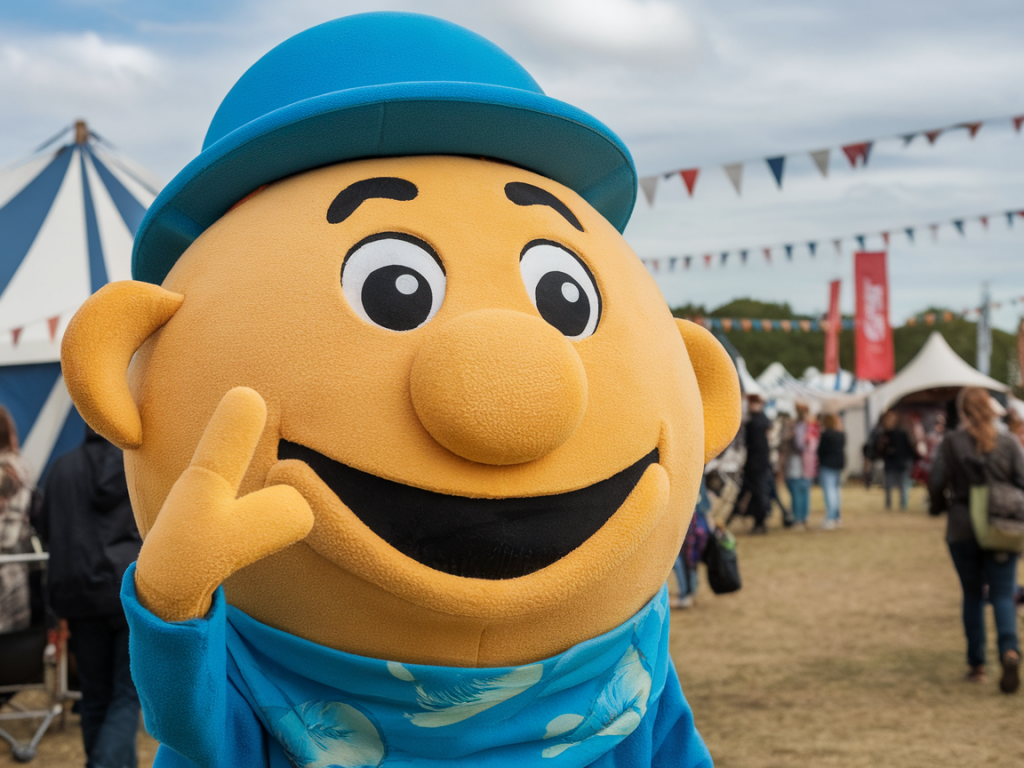
I was once asked to bring a knitted mascot to a windy seaside festival and then fly it home the next day. It sounds like the sort of whimsical errand that belongs in a folktale — and in many ways it does — but it also forced me to think practically: how do you design a weatherproof festival mascot that fits airline cabin rules? I’m going to walk you through the approach I use when I’m designing characters that need to survive drizzle, be seen on a muddy field, and still fold into a carry-on bag.
Start with the travel brief
Before you choose yarns or seams, write a short travel brief for your mascot. Ask yourself:
How big can it be in-cabin? (Check your airline’s carry-on dimensions.)Will the mascot be worn by a person, puppeted, or freestanding?How much weather protection is needed — drizzle, full-on rain, wind, or sun?Are there any electronics or batteries inside it?Airlines aren’t uniform. Many carriers allow a standard roll-aboard of around 56 x 36 x 23 cm (22 x 14 x 9 in) as cabin baggage, but low-cost airlines can be stricter. If your mascot has a large head or rigid frame, modularity and collapsibility become lifesavers. I always check the airline’s exact dimensions and weight limits and pack a photo and dimensions on my phone — sometimes gate agents want to see proof.
Designing for weather: materials and layering
Weatherproof doesn't mean you must use industrial materials. For a knitted aesthetic that performs outdoors:
Outer shell: Choose a lightweight, water-repellent fabric like silicone-coated nylon, ripstop nylon with a DWR finish, or a thin PU-coated polyester. These fabrics shed light rain and wind while still feeling textile-y when used as a removable coat.Knitted core: For the visible character elements, pick synthetic yarns such as acrylic, nylon blends, or wool treated with lanolin alternatives. These yarns hold colour, dry faster than pure wool, and resist felting in drizzle.Inner waterproofing: Consider a removable, thin hardshell or inflatable bladder inside the head or body that keeps core stuffing dry. Inflatable cores are great for travel because they pack flat.Seams and finishes: Use taped seams or seam-sealing for fabric components. For a knitted outer layer, line it with a thin waterproof lining (e.g., Pertex Shield or a microfleece with DWR) to protect the stitches.Keep it light, modular, and collapsible
Rigid frames are bulky and usually impossible to stow in-cabin. My favourite strategies:
Make the mascot in parts: head, torso, arms, legs can attach with heavy-duty snaps, webbing clips, or hidden zips. Detachable parts compress much smaller.Use inflatable cores for volume (think inflatable pool toys or camping pillows inside a knitted shell). They deflate flat and are cabin-friendly — but don’t use a compressed CO2 canister or pressurised inflators.When you need structure, choose telescoping poles or carbon-fibre rods that collapse down to 40–50 cm. They’re lightweight and fit in a long carry-on or checked bag if allowed.Filling and weight considerations
Flight weight matters. Bulky polyester stuffing plus wooden dowels will push you over cabin limits. I recommend:
Closed-cell foam pads for padding — they’re light, don’t absorb water, and provide insulation and shape.Microbeads or pellet bags in small pouches for weighted feet — they can be removed for travel and reinserted at the festival.Avoid water-absorbent materials like untreated wool or cotton batting in the outer layers.Electronics, batteries, and airline rules
If your mascot has lights, sound modules, or a small fan inside, you need to be careful. Airlines treat lithium batteries differently:
Small, installed lithium-ion batteries (e.g., in portable speakers) are usually allowed in carry-on but often not in checked luggage. Check mAh limits — typically ≤100 Wh is fine; between 100–160 Wh needs airline approval.Remove loose aerosols, gas cartridges, or anything pressurised.For anything motorised (fans, motors), try to use USB-power banks that comply with airline rules and are carried in-cabin.Safety, visibility, and performer comfort
A festival mascot must be safe for both the wearer and the crowd. Consider:
Ventilation: Mesh or small fans in the head (run on a power bank) keep the performer cool. Make vents discreet and weather-shielded.Visibility: Use clear, anti-glare plastic for eye windows or large, forward-facing mesh panels that look textile but let the performer see.Fire safety: Use flame-retardant linings or pre-treated fabrics if your mascot will be near open flames (campfires, torches, pyrotechnics). Check local festival safety rules.Balance: Place heavier elements low and centrally to prevent tipping and neck strain.Packing list for airline travel
I always travel with a compact toolkit and spares. Here’s my checklist that fits comfortably into a small roll-aboard or under-seat bag:
Packed, deflated inflatable core and small hand pump (manual).Head/limb clips and a small roll of heavy-duty Velcro.Rolled seam-seal tape and a small tube of flexible seam adhesive (e.g., Shoe Goo or Gear Aid Seam Grip).Mini repair kit: needle, upholstery thread, spare yarn, spare snaps.Clear photos and a dimensions sheet (for gate agents).Soft packing: packing cubes or a protective cotton bag to prevent scuffs.Materials table: quick pros and cons
| Material | Pros | Cons |
| Silicone-coated nylon | Highly water-repellent, lightweight, folds small | Can be noisy; less tactile than knitted cloth |
| Acrylic/nylon yarn | Fast-drying, colourfast, affordable | Can melt if near heat; less breathable than wool |
| Closed-cell foam | Light, waterproof, retains shape | Bulkier than microbeads, harder to shape finely |
| Inflatable bladder | Packs flat, adjustable volume | Risk of puncture; needs protective layer |
On-the-ground festival tips
Once you’ve flown in, do a quick field check: reinflate cores, reseal any seams, and attach any weighted elements you removed for travel. Keep a small waterproof poncho or hood for last-minute showers — even the most water-repellent fabrics can soak under persistent rain. And finally, test your mascot in the conditions you expect: practice walking, turning, and interacting in a wind tunnel of a fan or an exposed field.
Designing a weatherproof, airline-friendly mascot is an exercise in restraint as much as creativity. You want the character to be memorable, but you also want it to survive a squall and a security gate. With modular components, inflatable structure, water-shedding outer layers, and careful attention to airline battery rules, you can create a festival friend who travels as lightly as your own notebook and needles — and opens a pocket of magic wherever it lands.