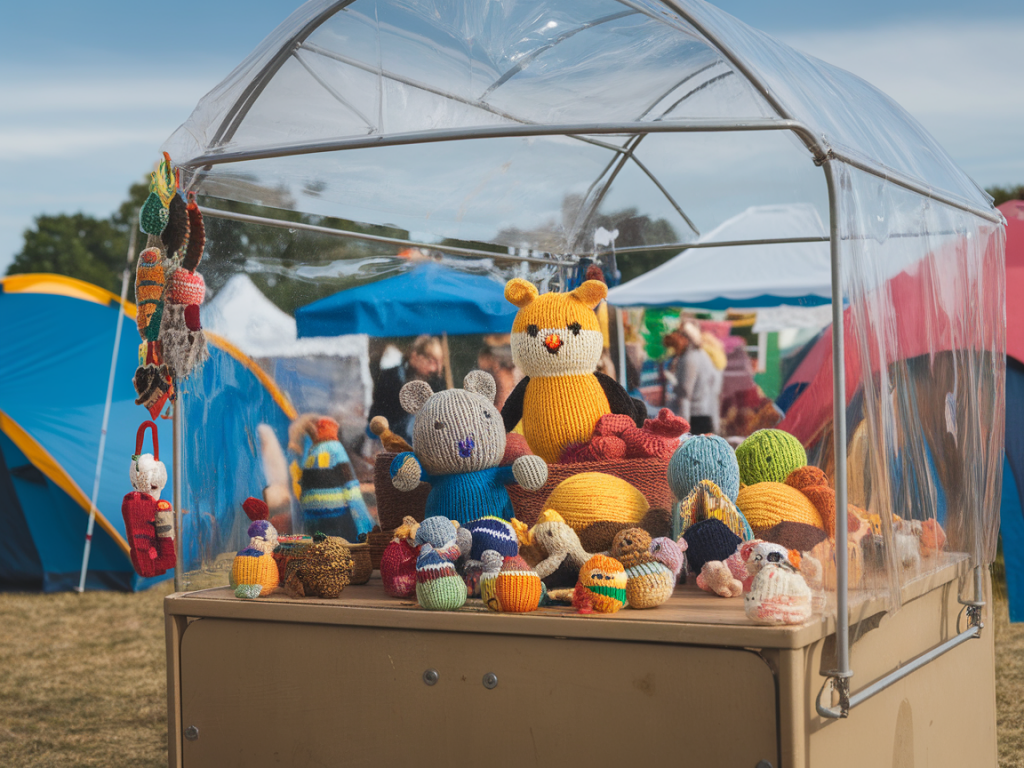
Rain at a summer folk festival is as inevitable as an accordion tune — charming in theory, a nuisance in practice. Over the years I’ve learned that keeping knitted characters both safe and visible when the skies open is a small performance in itself. I want people to see the stitch-work, the tiny embroidered faces, the personalities I’ve coaxed into existence, not a soggy pile hidden under a damp tarpaulin. Below I share the portable display setups and kit I rely on to keep knitted toys dry, secure, and appealing on rainy festival days.
Choose a shelter with visibility in mind
I always start with shelter. A full canopy will protect your stall from rain, but not all canopies are equal for showing off delicate, hand-knitted toys. I favour pop-up gazebos with at least two open sides so visitors can see inside without squeezing through a wet crowd. Brands like Coleman and Quechua make sturdy, quick-erect models that stand up to wind and drizzle — but test the frame beforehand: cheap joints can sag and put toys at risk.
If your festival allows it, add clear PVC side panels. They keep rain and wind out while letting passersby see your display. I carry a couple of clips and bungee cords to fasten panels quickly; they’re lifesavers when a sudden squall drives customers closer to the stall.
Elevate and layer displays to keep items off wet surfaces
Wet grass and muddy walkways mean low displays are vulnerable. I use a combination of folding shelves, cake stands, and lightweight risers to create tiers. Elevation does two things: it prevents accidental splashes and helps the eye travel across the display so each knitted character gets noticed.
- Folding shelving units: Lightweight aluminium or plastic shelves (I use a small collapsible unit that fits in my car trunk) are essential.
- Tiered cake stands and hat boxes: Cute, compact, and great for grouping small characters by theme.
- Clear acrylic risers: They’re a bit pricier but they don’t distract from the work — the knitted pieces remain the focal point.
Waterproof barriers that still show off knitting
Clear protection is my go-to. I use four main treatments depending on how exposed the stall is:
- Clear vinyl pockets/sleeves: These are perfect for single-row displays. Slipping a knitted toy into a clear sleeve keeps it dry but visible; customers can see texture and colour without contact.
- Transparent umbrella stands: Small acrylic or PVC display boxes with a flip-top keep toys dry and children’s sticky fingers at bay.
- Plastic hanging rails: I sometimes hang characters in resealable clear bags from a rail at the front of the stall. They look like ornaments on show.
- Makers’ trick — detachable clear panels: For stalls with frames I attach clear Perspex panels to the front and leave a small gap for handling purchases. It keeps the display showroom-dry while letting customers peer in.
Quick-setup options for last-minute showers
Not every festival gives you time to convert your stall into a watertight shop. For sudden rain I always have:
- Large waterproof picnic blankets to cover boxes and crates
- Clear shower curtains (yes — cheap and surprisingly effective) clipped over displays
- Clips, giant pegs, and Velcro straps to secure fabric from flapping
I once kept an entire range dry simply by slipping a clear shower curtain over an already-tiered display and using wooden clothespins to hold it taut. It was far from glamorous, but people could still admire faces and pull out a toy for purchase through the bottom gap.
Protection during handling and for small items
Wet hands are the enemy of wool. I provide a small hand-sanitiser and a note asking customers to avoid handling unless they intend to buy. For safety and neatness, I keep:
- Resealable bags in various sizes for purchases
- Small tissue paper squares to buffer fragile embroidery
- Labels that show fibre content and washing instructions so customers know how to care for wool in rainy weather
Display furniture I rely on
Over the years I’ve experimented with all sorts of furniture. Here’s a quick comparison I use when packing:
| Item | Pros | Cons |
|---|---|---|
| Collapsible metal shelving | Sturdy, elevated, lots of tiers | Bulky to carry, requires flat ground |
| Folding table + cake stands | Lightweight, charming presentation | Less vertical space, vulnerable at floor level |
| Clear acrylic boxes | Professional look, waterproof | Expensive and can be heavy |
| Hanging rails with clips | Great for costumes and dolls, very visible | Needs a frame or crossbar and can swing in wind |
Packing list for rainy festival days
I have a waterproof tote that’s always loaded. If you want to mirror my kit, pack these items:
- Pop-up canopy with clear side panels (or clear PVC sheets)
- Folding shelving unit and small folding table
- Clear vinyl sleeves and resealable bags
- Shower curtains and large waterproof blankets
- Clips, bungee cords, heavy-duty pegs
- Weighted table corners (sandbags or silicone weights)
- Tissues, hand-sanitiser, repair kit (needle, matching yarn, safety pins)
- Plastic crates for overnight storage and a weatherproof tarpaulin
Overnight and emergency care
When a storm comes overnight, store toys in plastic crates with lids elevated off the ground. I keep a moisture-absorbing pack in each crate during long festival weekends to guard against damp. For on-the-spot repairs — a loose eye or a slipped stitch — I carry a tiny repair kit that’s saved many a sale. Customers appreciate the confidence to buy when they see I can fix a snag immediately.
Final touches that invite customers in despite the rain
Visibility is not just about dryness; it’s about warmth. Soft lighting (battery-powered LED fairy lights), clear signage, and a little theatricality — arranging characters on layers like a tiny theatrical stage — draw people in. A sign that says “Please ask to handle — we’re keeping things dry!” invites curiosity while protecting the work.
Rainy festivals demand flexibility, and my setup has evolved through trial and error: inexpensive hacks like shower curtains sit beside dedicated display solutions like acrylic boxes. The goal is always the same — keep the knitting dry, readable, and full of personality so each knitted character can still tell its story, even when the weather is trying to drown out the tunes.