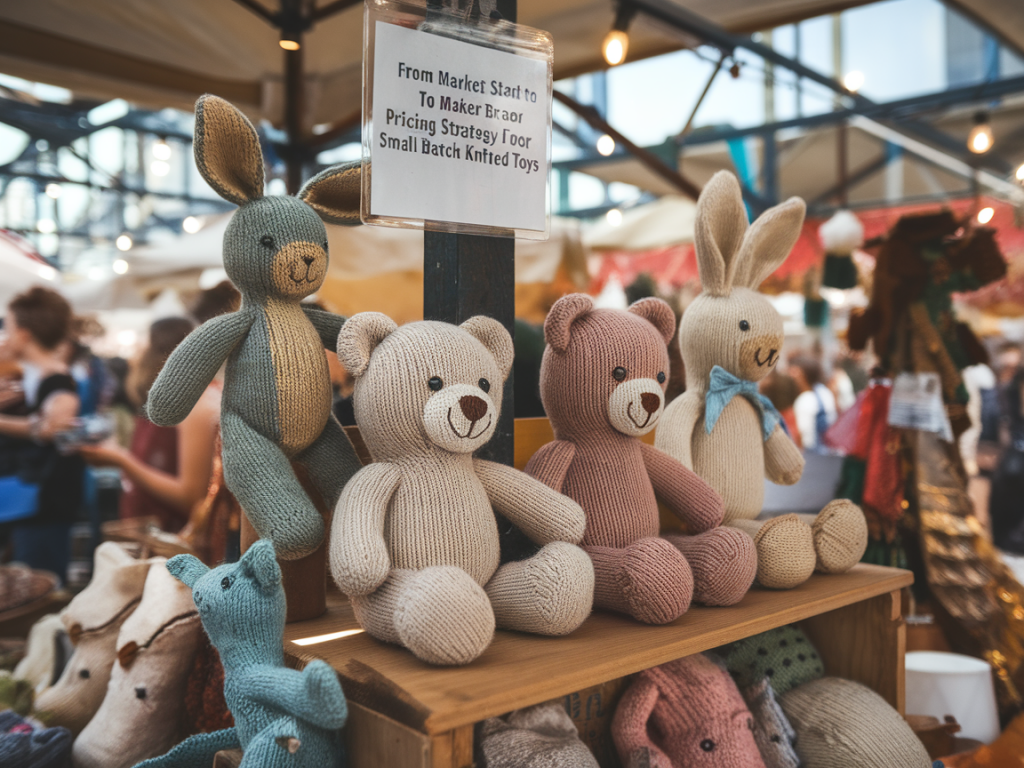
I still remember the first fair where I nervously pinned a price tag to a tiny hand-knitted fox and wondered if anyone would pay more than the cost of the yarn. Years later, after enough festival afternoons, wholesale orders and late-night pattern edits, I’ve built a pricing approach that respects the craft, covers the costs, and helps small-batch makers grow beyond the market stall. Below I’ll share the practical steps I use, common pitfalls to avoid, and the questions I wish someone had answered me on that first weekend trading.
Start with full cost accounting — every stitch matters
People often ask: “Should I price based on how long it takes me?” My answer is yes—but not only that. Time is important, but you must account for materials, packaging, travel, stall fees, marketing, and the invisible wage for your time. I keep a running spreadsheet where each design has a clear breakdown:
| Item | Example cost |
|---|---|
| Yarn and stuffing | £4.00 |
| Buttons/embellishments | £0.50 |
| Packaging (bag, swing tag) | £0.80 |
| Labour (2 hours at £12/hr) | £24.00 |
| Allocated stall & travel per item | £2.00 |
| Total cost per unit | £31.30 |
Use a realistic wage for your time. Paying yourself below minimum is tempting to stay competitive, but it’s not sustainable. I model both current labour cost and a target wage—use whichever helps you plan to scale or delegate.
Decide your pricing model: cost-plus, market-led, or value-based?
There are three common approaches, and I often combine them depending on the product and the platform.
I usually calculate a cost-plus baseline, then adjust up or down after market research. If a design has a strong story—perhaps it’s inspired by a festival tradition or includes custom embroideries—I lean into value-based pricing.
Wholesale vs retail: different math, different expectations
Many makers want wholesale accounts, which is brilliant for growth, but wholesale pricing needs to absorb a retailer’s margin. Typical wholesale is 50% of your recommended retail price (RRP). That means if your production cost is £20 and you want to keep a 50% gross margin on retail, set RRP at around £60 and your wholesale price at £30. Make sure the wholesale price still covers your costs and pays you a fair wage.
When offering wholesale, think about minimum order quantities, lead times, and returns policy. Small-batch makers often struggle with the MOQ; consider offering small curated bundles or a re-stocking schedule instead of demanding large upfront orders.
Psychological pricing and positioning
Price communicates value. A toy priced at £18 might feel “cheap” and risk being seen as low-quality, while £35 signals handmade care. Use pricing to position your brand as cosy and thoughtful rather than bargain-basement. Consider:
Packaging, presentation and perceived value
Beautiful but practical packaging adds perceived value and can justify a higher price. Invest in a distinctive swing tag with a short tale about the character and care instructions. I use recycled kraft bags and include a small printed card with a micro-story—buyers often tell me this is why they purchase as a gift.
Practical tips for testing and adjusting prices
Legalities and practical overheads to remember
Don’t forget VAT thresholds (in the UK) and how they change your pricing. If you approach the VAT registration threshold, decide whether to absorb the tax, pass it to customers, or use the VAT scheme to maintain competitiveness. Also budget for small but real overheads: website fees, transaction costs (Stripe/Etsy), and packaging materials.
Scaling without losing the hand-made heart
If you want to grow from market stall to maker brand, consider ways to maintain craft values while improving margins: sell patterns or kits, offer workshops (both in-person and digital), or introduce small runs produced with trusted assistants. Each of these opens new revenue streams and changes the pricing calculus—patterns can be priced lower but sold in volume, kits command a premium for convenience, and workshops let you charge for expertise rather than only for an object.
Pricing knitted toys is part accounting, part storytelling. When you include honest labour, thoughtful packaging and a clear brand story, your prices start to make sense to customers who value handmade. Price with respect for your skill, test with curiosity, and let both the market and your community shape the path from stall to brand.