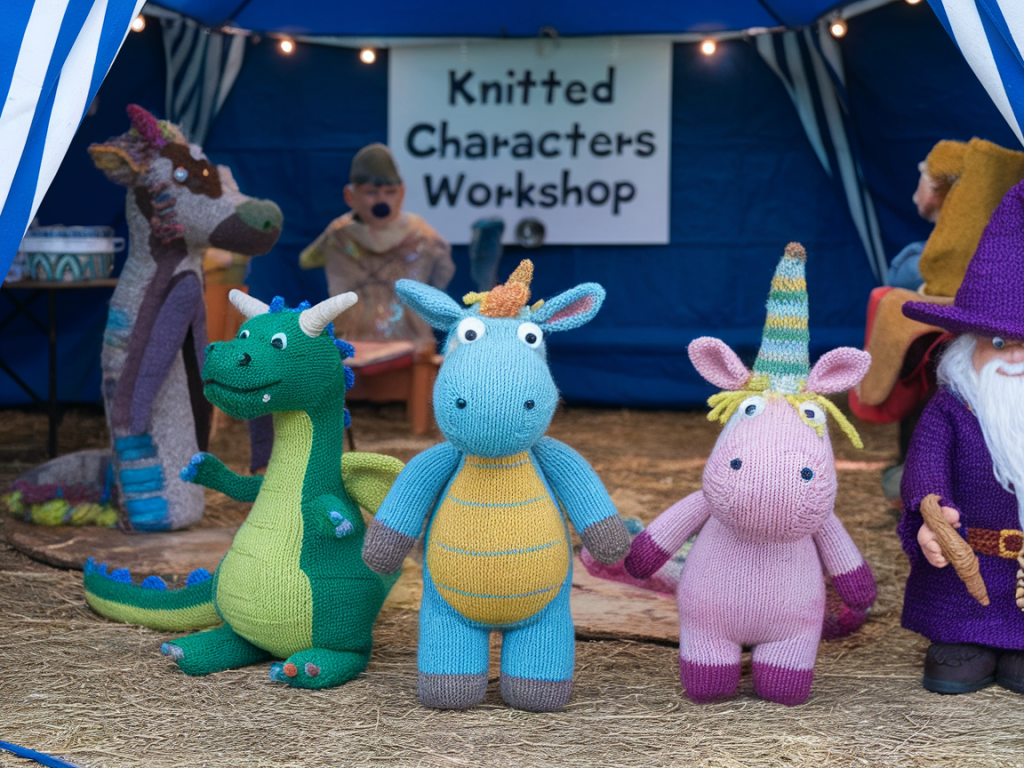
I love a village fête because it’s where making and merriment meet: bunting flutters, local bands play, and children dart between stalls with sticky hands and endless curiosity. Hosting a hands-on knitted character workshop at your local fête is one of my favourite ways to bring craft, story, and community together in a small, joyful package. Here’s a practical, warm guide to help you plan and run a session that’s welcoming to beginners, interesting for experienced knitters, and delightfully festival-ready.
Why a knitted character workshop works at a fête
Knitted characters are compact, tactile, and endlessly adaptable — perfect for an outdoor, high-traffic setting. They allow people to take away something meaningful (a small toy, ornament, or mascot) and a story to tell. At fêtes, attendees are often looking for short, hands-on activities rather than multi-hour classes. A well-designed workshop can introduce techniques, spark imaginative play, and connect makers of different ages and skills.
Decide your format and target audience
First, choose the scale and focus. Do you want to run several 30–45 minute drop-in sessions, one or two longer 90-minute workshops, or a continuous “make-and-take” stall where people work at their own pace? I often recommend a mix: a booked morning workshop for adults or families wanting a calmer experience, and drop-in sessions in the afternoon for children and casual visitors.
Consider audience age and ability. A basic format that appeals to families might teach a simple garter-stitch body, safety eyes, and basic stuffing. A craftier session could include colourwork stripes, sewn-on features, or a small felted accessory. Be explicit in your promotion so attendees know what to expect.
Essential materials and kit (compact shopping list)
Keep materials simple and robust for a fête setting. Here’s a sample table of what I usually pack for a 2-hour, eight-person morning workshop:
| Item | Quantity for 8 participants |
|---|---|
| Wool yarn (DK or aran, 50g) | 8 balls (assorted colours) |
| Knitting needles (pair, size 4–5mm) | 8 pairs + 2 spare pairs |
| Small toy stuffing (polyfill) | 2 kg (enough for many characters) |
| Safety eyes / embroidered features | Assorted packets |
| Yarn needles, stitch markers, tape measures | Sets for each participant |
| Pre-printed simple pattern sheets | 10–15 copies |
| Table coverings, scissors, hand sanitiser | 1 each |
You can mention brands tailored to your audience—Cascade 220 for a rustic feel, Rico Designs for bright DKs, or ethical brands like Brooklyn Tweed or West Yorkshire Spinners if your crowd values provenance. I usually bring a small selection of yarns with different textures to spark ideas.
Set up an engaging stall or workshop space
Presentation matters at fêtes. I use a long table covered with a cheerful cloth, wicker baskets for yarn, and a small pinboard with photos of finished characters in different styles. A simple sign with the workshop name, session times, and a short price (if applicable) helps passersby. If you can, position near children’s activities or the refreshment tent — foot traffic matters.
Make sure seating is comfortable and accessible: mix low chairs for kids and taller chairs for adults. Provide good lighting (a clamp lamp if shade is unpredictable) and keep your tools organised in trays so people don’t have to rummage.
Workshop structure and timing
Here’s a typical 45-minute drop-in session format that works well:
If you run a longer bookable workshop (90 minutes), add time for colour changes, simple sewing, and a more relaxed story-sharing circle where people explain who their character is and what festival role they might play.
Accessibility, safety, and child-friendly tips
Think inclusively: offer left-handed needles, use large plastic eyes for younger children (or encourage embroidered faces instead of small parts), and provide clear visual instructions for non-readers. Keep scissors and pins in a central adult-only area and ask that very young children be accompanied. I always keep a first-aid kit and a bowl of spare buttons and yarn ends — small problems become big frustrations at busy events, and quick fixes keep the mood light.
Pricing, promotion and partnerships
Decide whether the workshop is free, donation-based, or charged. A small fee (£5–£15) helps cover materials and keeps bookings serious; many fêtes subsidise community workshops, so check with organisers. Promote in advance via the fête’s social media and your own channels: post pictures of sample characters, share a short video of a technique, and list age suitability. Partner with local yarn shops for materials or prizes — they might sponsor yarn in exchange for a mention.
Bring folk stories in as seasoning
Because my heart lives at the crossroads of knitting and folklore, I weave (pun intended) short local tales into the session. Introduce a tiny legend related to your village or the festival — a mischievous sprite who stitches caps for festival-goers, or a travelling fiddler who always carries a knitted bird for good luck. Invite participants to name or attribute a little tale to their character. It’s an easy, memorable way to connect craft to place and make the keepsake feel like a piece of living tradition.
Troubleshooting: common questions and quick fixes
Expect a few repeat questions and have ready solutions:
Keep a few pre-made bodies and heads for children who run out of time: they can sew / embellish and take home a mostly-complete piece.
Capture and share the moment
Take photos (with permission) and ask participants to tag the fête and your blog/Instagram handle. A small display of finished characters at the stall will draw people in. After the event, post a short round-up on Knittedcharacterfolkfestival (link to https://www.knittedcharacterfolkfestival.co.uk) with patterns, photo highlights, and the little folk tales that emerged — it helps build a local memory and encourages attendance at future workshops.
Running a knitted character workshop at a village fête is less about perfection and more about hospitality: offering tools, a little guidance, and space for people to make something with their hands while sharing stories. With a compact kit, a clear plan, and a pinch of storytelling, you can create a small, spirited place where knitted creatures — and connections — are born.