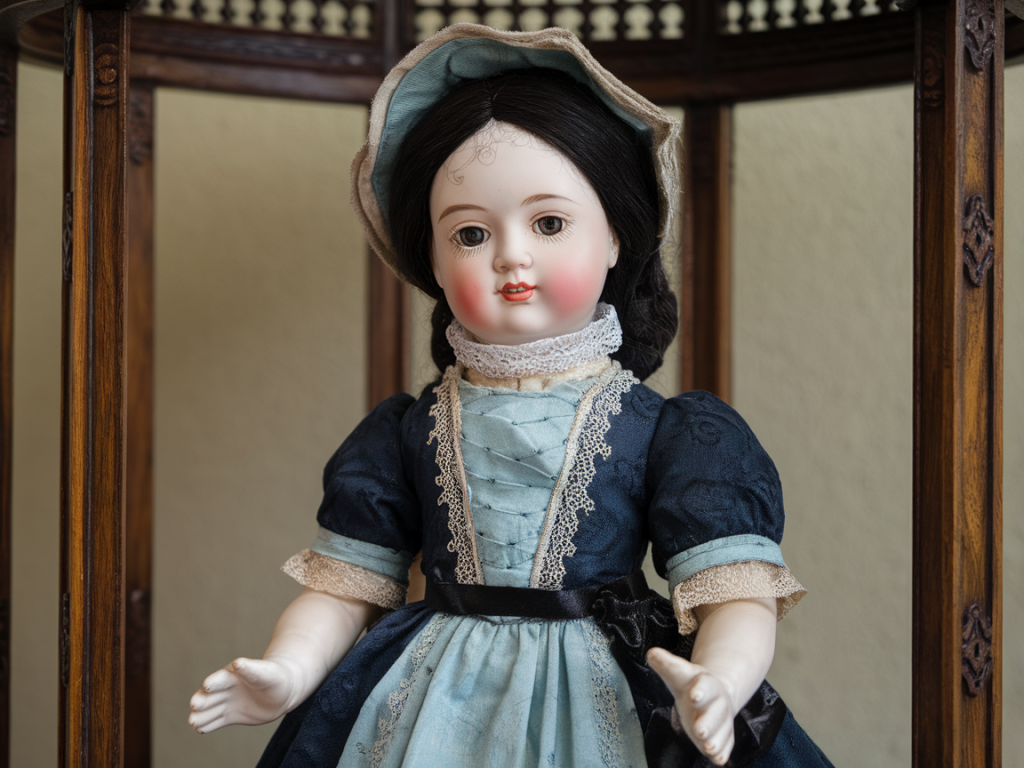
When I first saw Hattie Rowan’s dolls at a summer market, I was struck by the way each tiny figure seemed to carry a whole life inside its knitted torso: stitched clothes that whispered of places, faces that suggested stories, and tiny props that anchored them in a particular world. I’ve been following Hattie ever since, and I asked her to talk to me about designing what she calls “narrative dolls” — characters intended to sing their origins before they ever meet a new owner. Her answers felt like a backstage pass into a craft practice that blends knitting, research, and a generous, story-forward approach to making.
How did you arrive at narrative dolls?
Hattie explained that the project started with a fascination for the lives behind the objects she saw at folk festivals. “I kept asking, who made the stall, where did they learn that technique, what music do they listen to?” That curiosity translated into dolls: small, portable characters with clothes and props that signal a cultural or personal origin. She told me she grew up in a household where oral stories accompanied every craft; patterns were learned from neighbours, and recipes came with a backstory. “I wanted my dolls to feel like those stories — condensed, tactile narratives you can hold.”
What does “sing their origins” mean in practice?
For Hattie, it’s about layering cues. A doll might wear a hand-spun scarf made from Shetland wool, carry a tiny accordion, and have a braid style that nods to a regional hairstyle. Each of those elements is researched and chosen deliberately. “It’s not about costume accuracy for its own sake,” she told me, “but about creating an evocative combination that prompts curiosity — so someone will pick the doll up and ask, ‘Where’s she from? What does she do?’”
Materials and sustainability
Hattie is meticulous about fibres and sourcing. She prefers British and small-batch yarns when possible — brands like Jamieson & Smith for Shetland yarns, and British Alpaca for squishy, recycled blends. She also reuses vintage buttons and fabric scraps for clothing details. “My practice is slow,” she said. “I want the materials to reflect the slow cultural processes I’m interested in.”
| Component | Typical Material | Why it matters |
|---|---|---|
| Body yarn | DK wool or cotton blend | Durable, soft, holds shape well |
| Clothing | Reclaimed fabric, hand-dyed wool | Textural contrast and story cues |
| Props | Wood, metal charms, tiny instruments | Anchors to a cultural practice or profession |
| Embellishments | Vintage buttons, embroidery thread | Personalised detail, heirloom feel |
Where does she find research and inspiration?
Hattie’s research practice mirrors how a folklorist works: field visits, listening, and archival reading. She spends festival season wandering stalls and chatting with makers; she visits local museums and reads oral histories. “Sometimes a single phrase from an elderly storyteller will steer an entire range,” she told me, laughing about a tea towel with a proverb that ended up embroidered into a doll’s apron. She also listens to music — traditional ballads, contemporary folk — and lets melodies shape the posture or prop of a character.
Design process: from sketch to finished doll
Hattie took me through her usual workflow:
She shared that she keeps a “story bank” — a notebook where she collects names, snatches of dialect, recipes, and song lines. When designing a new range, she flips through this bank and picks a cluster of elements that resonate together.
Patterns and sharing knowledge
Most makers wonder whether Hattie sells patterns or keeps them private. She offers both: a few core patterns for sale, often through Ravelry and her Etsy shop, but many of the more story-rich designs are released as workshop projects or limited tutorial packs. “Patterns are my way of teaching the basics,” she said, “but the storytelling comes from the maker’s choices — colours, trims, and little props — so I encourage people to mix things up.”
Pricing and the ethics of small-scale making
Pricing is a topic Hattie approaches with care. Her dolls often take several hours, sometimes days, to create, especially when she hand-dyes yarn or carves tiny props. She factors labour, materials, and the intangible research that goes into a character’s backstory. “It’s important makers charge sustainably,” she told me. “Too often, handcrafted items are undervalued because their labour is invisible.”
To help buyers understand value, she includes a short card with each doll detailing its materials, origin story, and care instructions. This small piece of paper becomes part of the narrative and helps justify the price.
Workshops and community
Hattie runs workshops at festivals and local community centres, focusing on both technique and storytelling. Participants knit basic bodies, then spend a session developing character backgrounds and props. I attended one of these sessions and watched an intergenerational group stitch and swap stories — a seamstress remembered a wartime song that inspired a scarf pattern; a teen brought a skateboarding story that influenced a doll’s posture. “The workshops are as much about listening as making,” Hattie said. “They’re places where oral and material culture meet.”
What surprised me most
Two things: how collaborative the practice feels, and how readily a small knitted object can open conversations. At a recent fair, a child asked if a doll’s scarf was knitted by their grandmother; an older maker overheard and began to teach the child a simple four-row pattern on the spot. That moment — the doll acting as a bridge across generations — encapsulates what Hattie aims for.
Practical tips for makers who want to tell stories with dolls
Talking with Hattie reminded me of why I love the overlap between craft and festival culture: small, handcrafted objects are vessels for bigger conversations. They carry lineage, practice, and personality in their stitches. If you’re at a fair this summer, keep an eye out for makers who treat dolls not as toys but as storytellers — Hattie’s work is one luminous example of that approach.