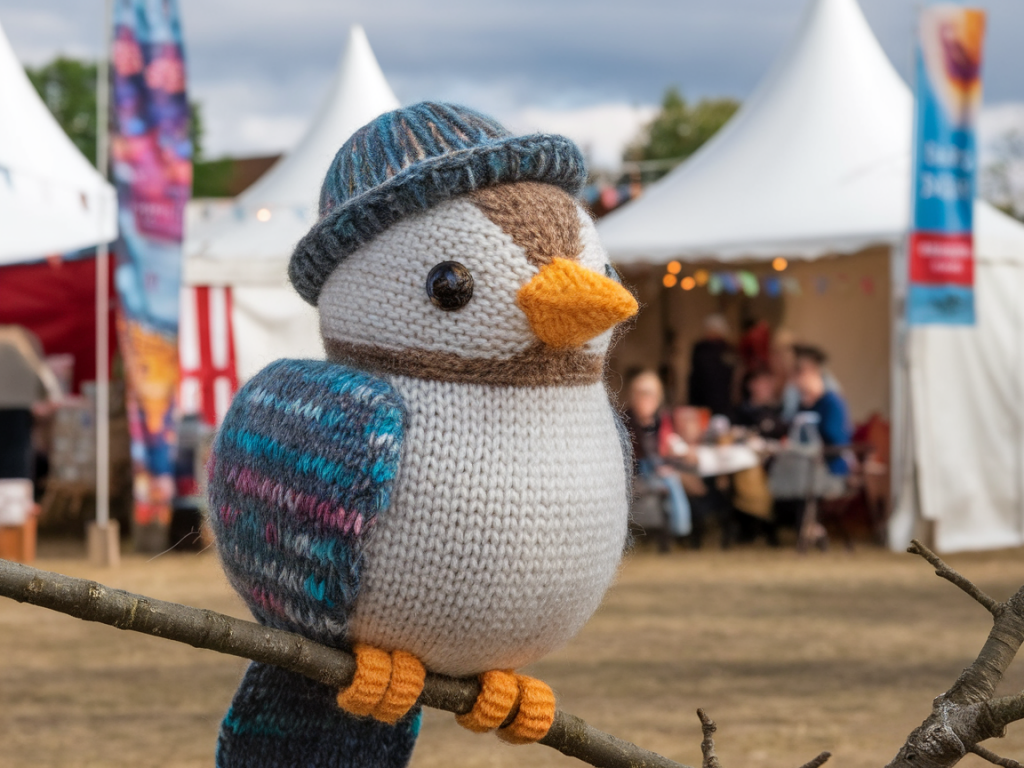
Hello — if you’ve ever watched a flock of festival-goers tighten their scarves against a wind-blown stage and wished you could bottle that tiny, bright spirit, then this pocket-sized folk songbird is for you. I make small knitted creatures to carry the memory of gatherings with me, and this little mascot pattern came from wanting something that could fit in a pocket, survive a muddy field, and still sing—metaphorically—through its colour and character.
Why a songbird as a festival mascot?
Birds feel like the first festival-goers: they arrive early, they herald the day, they perch on fenceposts and old lamp posts and watch the music. A songbird mascot is compact, light, and full of personality. It’s also an excellent canvas for festival colours and badges: you can sew on a tiny ribbon, stitch in a logo, or add a loop so it’s a zipper charm for your festival coat.
Materials and tools
I designed this pattern to be accessible and durable for festival life. Here’s what I recommend:
Gauge and finished size
My sample bird knitted in fingering yarn on 3 mm needles is approximately 10 cm (4 inches) tall from tail to head. Gauge is not critical for this kind of toy, but tighter knitting gives a neater finish and prevents stuffing showing through. Aim for about 28–32 sts per 10 cm in stockinette.
Abbreviations
Body (worked in the round)
CO 36 sts. Join to work in the round, place marker.
Begin shaping the head:
Cut yarn leaving a long tail, thread through remaining sts with tapestry needle and pull tight to close. Secure and weave in end. Stuff firmly but evenly before final closing; a dense stuffing helps the bird keep form during travel.
Wings (make 2)
These are small, curved wings you sew onto the sides.
Beak
I use a tiny felt triangle for the beak because it’s quick and sturdy at festivals, but you can knit a small cone if you prefer.
To knit a beak: CO 6 sts, k2 rows, decrease (k2tog across), bind off, sew in place.
Eyes and expression
Eyes convey most of the bird’s character. For festival durability I favour embroidered eyes or 6 mm safety eyes secured with washers. If you’ll give the bird to a child, check safety guidelines in your region.
Tail
For a lively tail that withstands being tugged out of a pocket, make a small knitted I-cord or a felt tail.
Finishing and festival-proofing tips
Sew wings and beak on firmly with backstitches. Use a strong thread like polyester or button-and-craft thread for attachment points. If you want to attach the bird to a lanyard or bag, stitch a small metal eyelet or sew a yarn loop at the top of the head (reinforce with several stitches).
To add personal festival flair:
Variations and adaptations
Make the mascot your own by mixing yarn textures and weights. A cotton body will be hard-wearing and washable; a mohair wing will add a halo of fluff perfect for storytelling photos under fairy lights. For an outdoor-ready mascot use synthetic blends that resist damp, and consider adding a small waterproofing fabric tag inside the seam (like Ripstop nylon) to keep the stuffing dry.
Care instructions for makers on the move
Festival life is sloppy and wonderful; plan for mud and spilled cider. I recommend:
Where this little bird fits into festival stories
I often tuck one of these birds into my pocket before I go on assignment at a folk festival. It’s a visual shorthand for the gigs I cover: stitched by hand, small enough to carry, and loud in colour and idea. Festival organisers sometimes adopt them as pocket mascots for volunteers; artisans pin them to stalls to signal “handmade here.” If you’re using this pattern for an event, I’d love to hear about it at https://www.knittedcharacterfolkfestival.co.uk — share a photo and a line about why your bird belonged at your festival.