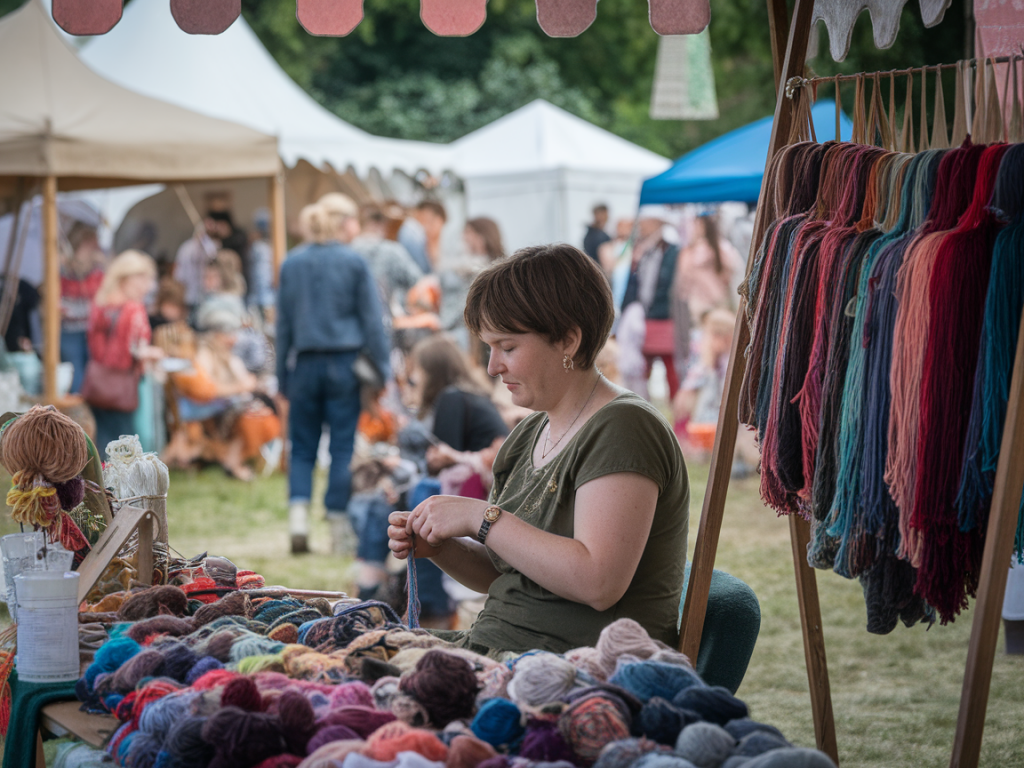
I set up my first pay-what-you-can yarn-mending stall at a midsummer folk festival because someone handed me a scruffed jumper and asked, half-joking, if I could give it a little life back. I mended it on a folding table between a clog-maker and a singer, and by the end of the day the jumper had a new elbow patch and a new owner who promised to return the following year. That small moment taught me everything about how a humble stall can stitch people together—literally and socially—if you design it with care.
Why pay-what-you-can works at folk festivals
Folk festivals are places where generosity, barter, and intergenerational exchange still make sense. A pay-what-you-can (PWYC) model removes a financial barrier and invites conversation. Visitors arrive curious and often with sentimental pieces—shawls knitted by grandmothers, festival jumpers with moth holes, or children’s scarves—so the stall becomes a living repair clinic and a storytelling nook.
Practical setup: what to bring
I keep a compact checklist in my bag so I don’t forget the essentials. The goal is mobility and approachability.
- Table and chair: A sturdy, waist-height table and a comfortable stool. I use a 6ft folding trestle table for market days and a low table when doing on-the-ground demos.
- Display cloth: A warm, textured cloth (linen or wool) makes samples look inviting. I avoid synthetic shine.
- Lighting: Battery-powered daylight LED lamps if the stall might be in shade.
- Tools: Stitch markers, darning eggs, tapestry needles, small sewing scissors, a felting needle and pad, crochet hook set, yarn needle threader, and a seam ripper. I like Tulip and Clover brand tools for reliability.
- Yarn library: A small basket of leftover yarns in accessible weights and colours for patches and visible mends.
- Spare notions: Buttons, small patches, elastic, and safety pins for emergency fixes.
- Signage: Clear PWYC instructions, service descriptions, and turnaround times.
- Record-keeping: A simple clipboard with intake forms, sticky labels, and a small cashbox and contactless card reader (Square, SumUp).
- Comfort items: Thermos, hand balm, and a cushion—standing all day drains you more than you expect.
Designing your pay-what-you-can offer
PWYC invites a wide range of people, so you need clear, easy-to-understand options. Keep the pricing guidance gentle—people appreciate being given a frame to work within.
- Suggested donations: List three tiers like “Thank-you” (£5), “Supporter” (£15), “Sustainer” (£30+). Make sure to say “suggested” so people know they can give less or more.
- Service menu: Short fixes (reweaving one small hole), medium (elbow patches, reknitting small ribbing), visible mends (decorative darning, appliqué), felting repair, and consultation for larger projects.
- Turnaround: Explain what can be done on-site, what will be taken away and returned, and estimated timelines.
- Swap & barter: Offer an option for barter—an unwanted skein of wool, a jar of jam, or a story contribution. These exchanges build the stall’s folklore.
Signage and storytelling at the stall
Signage should do more than explain services; it should invite story-sharing.
- Have a laminated card that says: “Bring us the story of this garment”—people often tell you about the person who made it, the festival it was worn to, or the misadventure that caused the hole.
- Display a few before-and-after samples and a small bulletin of handwritten thank-you notes or festival memories.
- Explain PWYC simply: “No one turned away for lack of funds. Donate what you can—every little helps.”
Taking items in: intake and care
Efficient intake prevents mix-ups and keeps people coming back.
| Step | What to record |
|---|---|
| 1. Label | Give each item a numbered tag with owner name, phone/email, date in, and expected return. |
| 2. Photograph | Take a quick photo of damage and overall garment for your records and the owner’s reassurance. |
| 3. Estimate | Note the suggested donation tier and expected turnaround. |
| 4. Consent | Ask permission if you’d like to share the story or photos on social media. |
Skills, training and volunteers
Not every fixer is the same, and people come with varying needs.
- Train volunteers in your basic approach: how to assess a mend, basic darning, and customer care. I run a short 45-minute pre-festival session with tea and a worksheet.
- Have one “expert” on call for tricky reknitting or structural work (I recruit from local knitting groups or Ravelry communities).
- Offer simple workshops during quiet times—20-minute darning demos draw audiences and create micro-tips people remember.
Creating repeat customers and a sense of community
Repeat visitors arrive because of trust, warmth, and ritual. I use a few simple habits to encourage return visits:
- Stitch cards: Give a small loyalty card: five mends and the sixth is free or discounted. People laminate them and collect stamps like festival badges.
- Mailing list: Ask visitors to join a newsletter for upcoming festivals and mending days. Offer a 10% discount or a free stitch marker for signing up.
- Story archive: With permission, assemble short vignettes of memorable mends on your site and social feeds—people come back to see their garment’s tale shared.
- Regular pop-ups: Set a monthly or seasonal town pop-up so festival-goers can see you between festivals.
Accessibility, ethics and sustainability
Accessibility and respectful practice are non-negotiable.
- Offer seated repairs and step-free access. Use clear fonts on signs and have a quiet corner for people who find festival noise overwhelming.
- Source your yarn library ethically—leftovers from local makers, donated scraps, or supply from brands with transparent practices (I sometimes use leftover Dale or Jamieson & Smith for traditional pieces).
- Be transparent about what you won’t fix: structural reknits beyond your scope or hazardous items you can’t take liability for.
Money, records and keeping PWYC sustainable
A PWYC stall still needs cash-flow sense.
- Keep daily tallies: broken down by donations, card payments, and barter. This helps you see if suggested tiers need adjusting.
- Set a target for suggested donations that covers material costs and a small living wage when possible.
- Apply for small grants from arts councils or festival fund pools to subsidise community mending days. Many local councils support heritage and craft projects.
Examples of what works
At one coastal folk festival I ran a PWYC stall with a “knit clinic” sign and a basket of free wool. A teenage volunteer mended a beloved fisherman’s scarf while the owner told a sea shanty; the man returned the next day with a thermos and two packs of biscuits as a thank-you. At another event, a visible-mend workshop filled up because people liked the idea of turning damage into decoration. Those little rituals built a queue—and repeat customers who brought friends.
If you’d like, I can also share my printable intake form and a few sign templates I use. They’re simple, festival-tested, and make the stall feel professional while staying warm and inviting.